Visit, Traditional Games and Gotong-Royong Strengthen PERKIM’s Bond with Orang Asli Community of Kampung Pisang

ᵇʸ: ᴹᴼᴴᴰ. ˢʸᴬᴴᴿᴵᴸ ᴿᴼˢᴰᴵ ᴬᴴᴹᴬᴰ ᶻᴬᴴᵁᴰᴵ
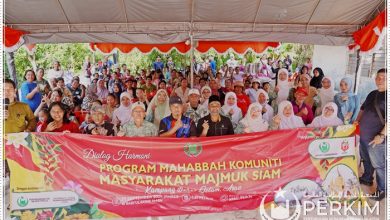
SUNGAI SIPUT, MAY 16, 2026 – A journey spanning nearly 350 kilometres and taking more than three hours from the headquarters of Muslim Welfare Organisation Malaysia (PERKIM) in Kuala Lumpur proved worthwhile as the PERKIM National delegation successfully arrived at Kampung Pisang, Jalong Tinggi here to carry out the Community Harmony Programme for the Multi-Racial Orang Asli Community organised in collaboration with Federal Territories Islamic Religious Council (MAIWP).
The route leading to the remote settlement was far from easy, with the delegation having to navigate narrow and uneven roads while passing through dense forests, rubber estates and oil palm plantations before reaching the village located deep within the interior of Sungai Siput (Utara), Perak.
However, the exhaustion quickly faded upon witnessing the warm reception from Kampung Pisang residents, who eagerly awaited the delegation’s arrival with great enthusiasm and a strong sense of kinship.

According to Tok Batin of Kampung Pisang Jalong, Batin Nasiri Ngah, Kampung Pisang is an Orang Asli settlement of the Temiar ethnic group, inhabited by more than 300 residents from various religious and cultural backgrounds.
He said approximately 80 per cent of the villagers are Muslims, while the remainder continue to practise animistic beliefs, yet they coexist harmoniously with mutual respect and understanding.
“Kampung Pisang is situated in the interior region of Jalong Tinggi and is surrounded by natural forests and river networks that serve as the lifeline of the community here.
“The area also possesses unique geographical features as it is located on hilly highlands near mountain ranges and eco-tourism waterfall attractions,” he said when met during the programme today.
He added that the majority of the residents are from the Temiar tribe, who continue to preserve their traditional customs and culture while embracing the growing development of Islamic dakwah activities in the area.
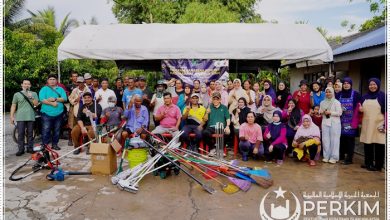
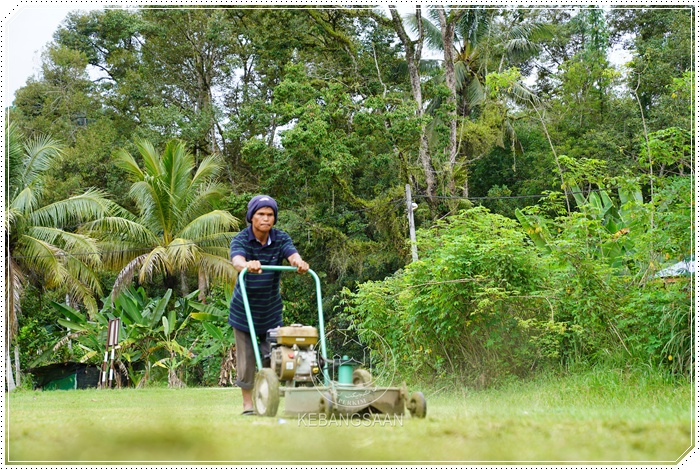
The programme began with a gotong-royong activity to clean the village field and surrounding areas, including grass-cutting, sweeping and collecting trimmed grass into rubbish bags.
Also participating in the activity were PERKIM National secretariat members Azura Abdul Rahman, Fatin Akmal Aksah and Muhamad Fardly Johan, as well as Universiti Sains Islam Malaysia (USIM) industrial training students Nurul ‘Izzah Salimi and Ummul Murshida Mat Shuqi, who assisted in cleaning the surau and its surrounding compound.
The atmosphere grew livelier as the programme continued with various traditional games involving children, women and men.
For the children’s category, participants took part in activities such as carrying a ball using a spoon, filling bottles with water and eating biscuits without using their hands, drawing laughter and amusement from the villagers.
Women participated in coconut bowling, pulling balls using hoops and musical chairs, while the men displayed strong sportsmanship through competitions such as tarik upih, poisonous balloon games and blowpipe contests, which are among the traditional games of the Orang Asli community.
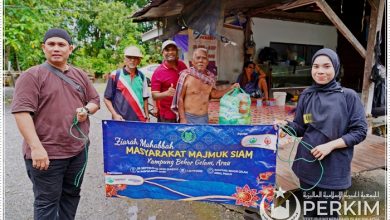
The highlight of the programme in the afternoon continued with a house-to-house visitation session led by Batin Nasiri Ngah together with PERKIM Perak State Executive Ustaz Muhammad Ariff Abdul Aziz; PERKIM Perak State Administrative Assistant Muhammad Hani Waran G. Ratnasamy; representative from the Dakwah Division of the Perak Islamic Religious Department (JAIPk), Ustaz Wan Mas Indra Juja; JAIPk Islamic missionary officer Ustaz Mohamad Noor PK Osman; and representative from the Department of Orang Asli Development (JAKOA), Azri Aliong.

PERKIM National Da’wah Executive 1, Ustaz Muhammad Jais Mariappan Abdullah, said the programme served as an important platform to engage more closely with the Orang Asli community through dakwah and welfare initiatives.
“Alhamdulillah, today we from the PERKIM National delegation have arrived at Kampung Pisang, Jalong Tinggi, Sungai Siput, Perak.
“Since this morning, we have conducted gotong-royong activities to clean the village and cut grass, in addition to organising traditional games involving children, adults and mothers.
“We involved every segment of the community to foster togetherness and ukhuwah within the village,” he said.
According to him, the afternoon house-to-house visitation successfully reached 16 homes, the majority of whose occupants were non-Muslims.
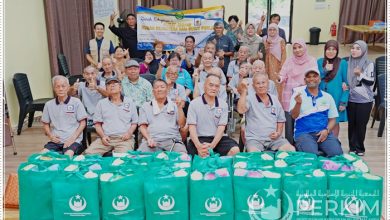
He added that 34 families also received food baskets at the village community hall as part of the dakwah and welfare mission jointly carried out by PERKIM and MAIWP.
“Among the contributions distributed to the villagers were food baskets containing rice, cooking oil, flour, sugar and milk sponsored by MAIWP.
“Alhamdulillah, everything has proceeded smoothly so far, and we are truly encouraged by the villagers’ commitment in ensuring the success of this Community Harmony Programme for the Orang Asli community,” he said.
He also expressed appreciation to JAKOA, JAIPk and the Perak Islamic Information Organisation (PIIN) for their extensive assistance in terms of preparation, implementation and logistics throughout the programme.
“From the beginning until the end of the programme, they remained by our side in helping us accomplish this dakwah and welfare mission.
“After the house-to-house visitation session, participants will be divided into two groups. One group will assist the women in preparing and cooking meals, while the other group will work together to clean and organise Surau Nur Hidayah Kampung Pisang,” he said.
According to him, the most touching aspect throughout the programme was the spirit of unity displayed by the villagers regardless of religion, with non-Muslim residents also coming forward to help prepare meals and participate in the gotong-royong activities.
“The villagers’ participation has been truly remarkable. From the children to the parents, everyone worked hand in hand in fostering ukhuwah Islamiah.
“What impressed us most was how non-Muslim villagers also came to assist with cooking and joined the gotong-royong activities together.
“Here, the relationship between Muslims and non-Muslims is extremely close, like one big family and siblings,” he said emotionally.
The Community Harmony Programme for the Orang Asli Community was seen not only as a platform for dakwah and welfare outreach, but also as a successful effort in nurturing unity, tolerance and compassion among people of different religions and cultural backgrounds in the country’s remote interior communities.
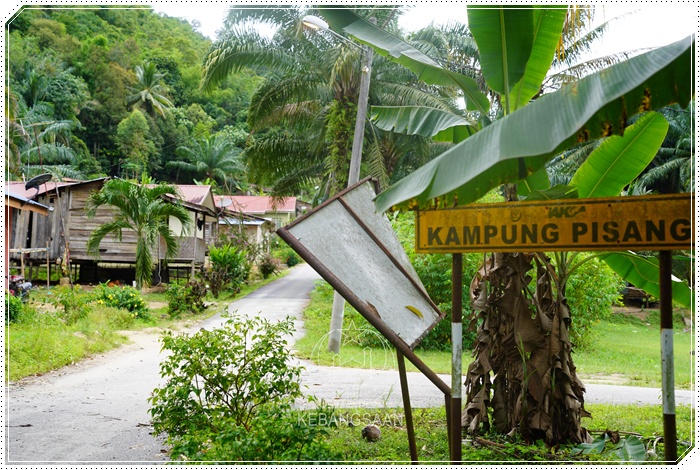
Kampung Pisang, Jalong Tinggi in Sungai Siput is an Orang Asli settlement of the Temiar ethnic group, inhabited by more than 300 residents from diverse religious and cultural backgrounds.
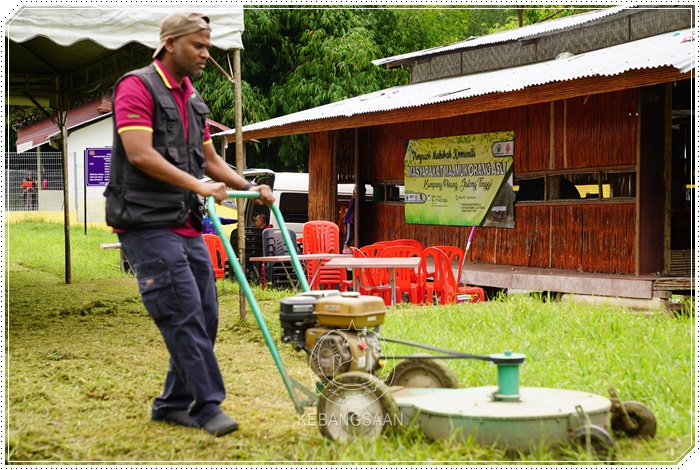
Ustaz Jais Mariappan mowing the grass at the Kampung Pisang field during the gotong-royong activity.
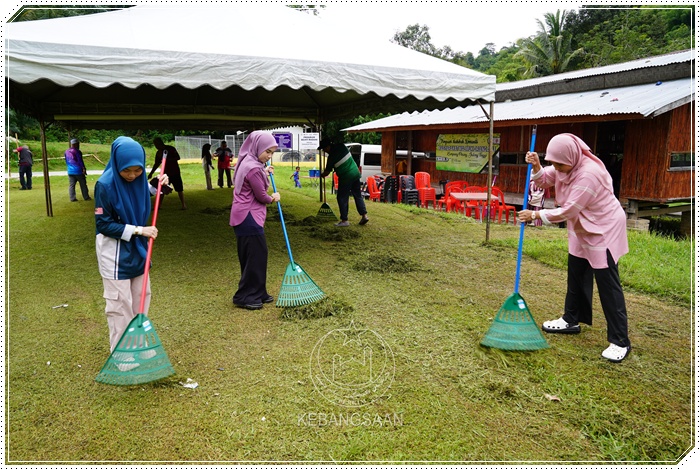
PERKIM National secretariat members together with villagers raking the grass to collect the cuttings in order to ensure the cleanliness of the field.
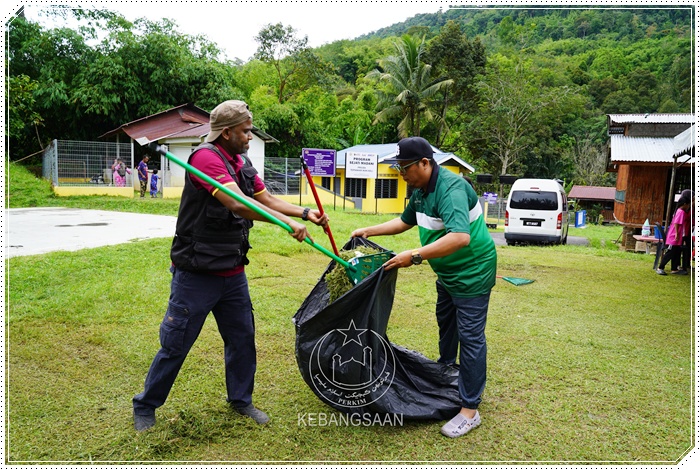
The cut grass being placed into rubbish bags before disposal.
Residents of Kampung Pisang also took part in the gotong-royong activity.
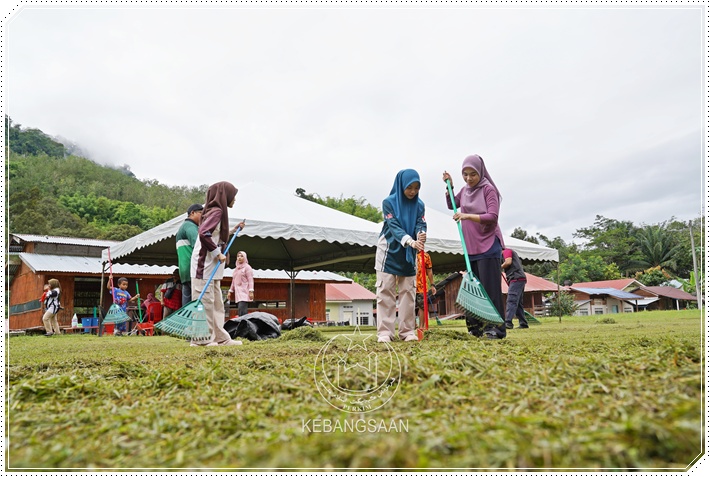
The secretariat ensured the compound was thoroughly cleaned to prevent thick layers of dead grass from accumulating before being placed into rubbish bags.
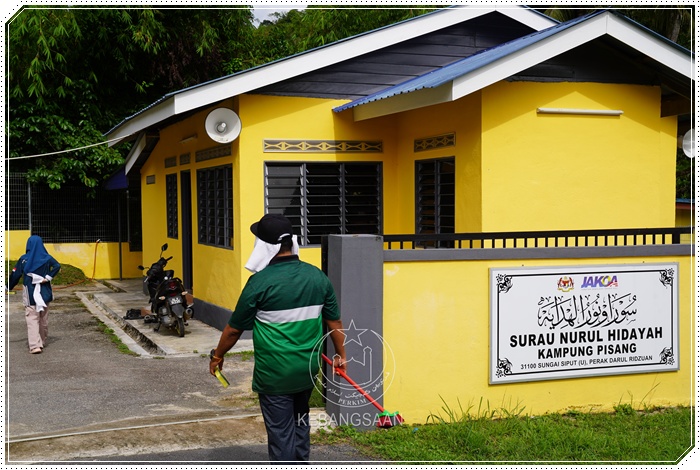
The secretariat continued the gotong-royong activity by cleaning the interior and surrounding area of the surau.
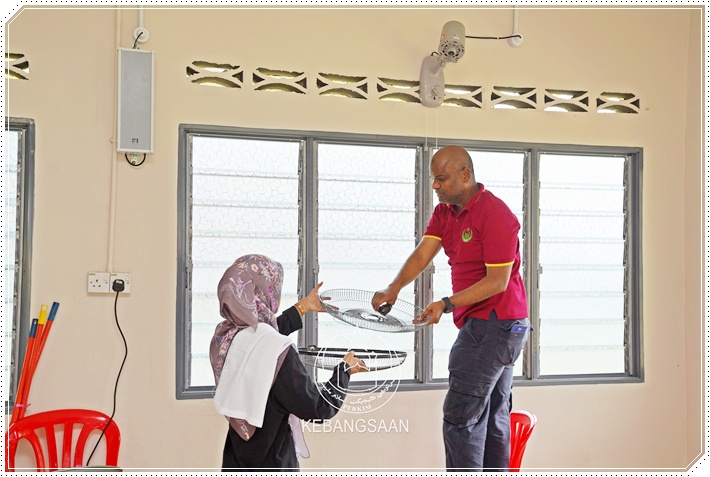
Ustaz Jais Mariappan, assisted by the secretariat, dismantling the fan covers and blades for cleaning of dust and dirt.
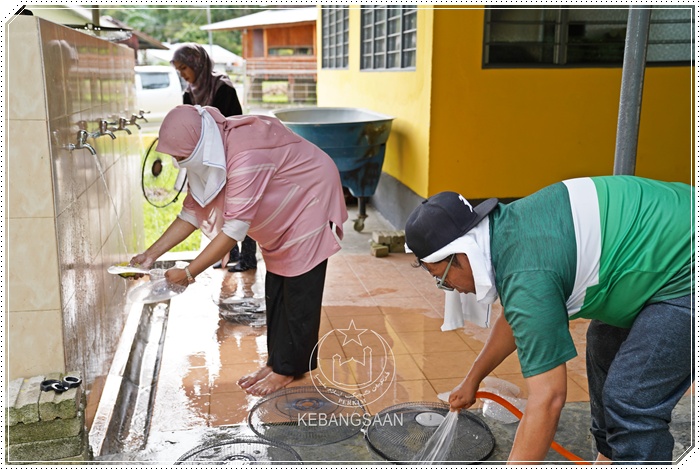
PERKIM secretariat members washing dust and grime off the fan covers and blades using soap and water.
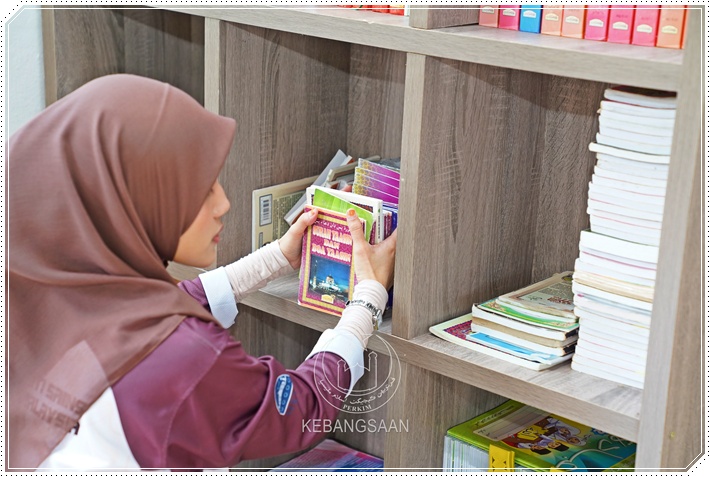
Nurul ‘Izzah arranging Yasin books and religious materials neatly and systematically.
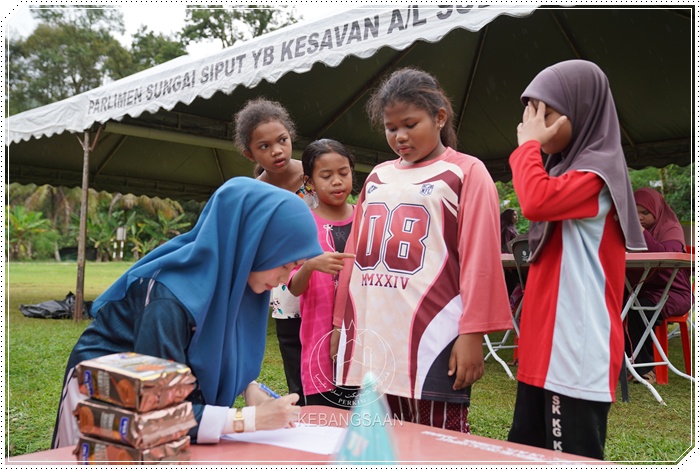
Ummul registering the names of children participating in the traditional games activities.
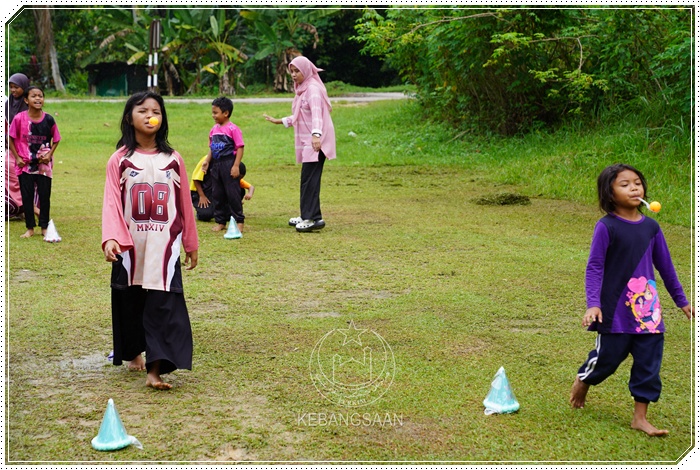
Carrying a ball using a spoon was the first traditional games activity participated in by the village children.
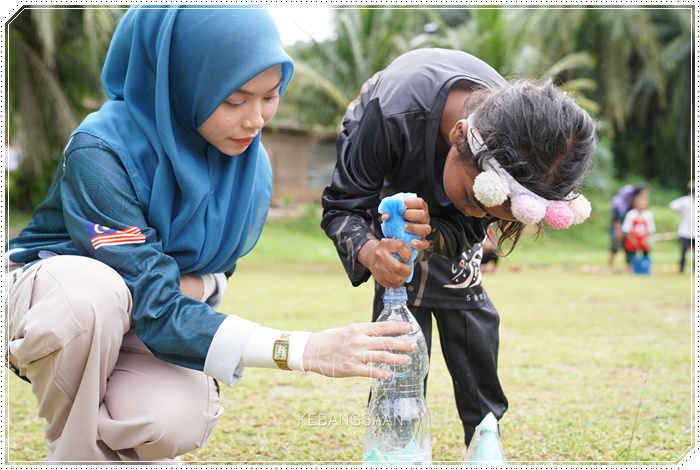
Secretariat members holding the bottle while children squeezed water-filled sponges into it.
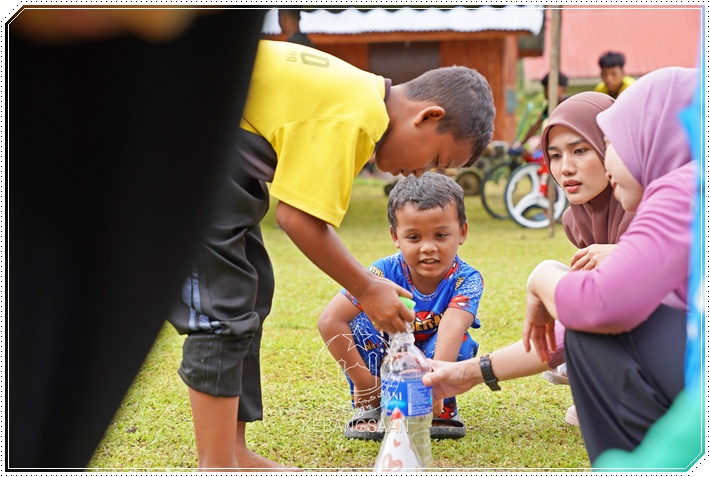
Secretariat members observing the children squeezing water-filled sponges into bottles during the traditional games activity.
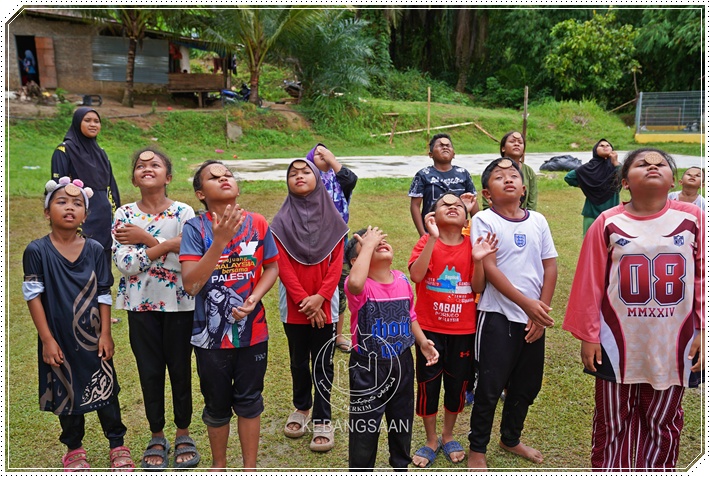
The challenge of eating biscuits without using hands during the traditional games session.
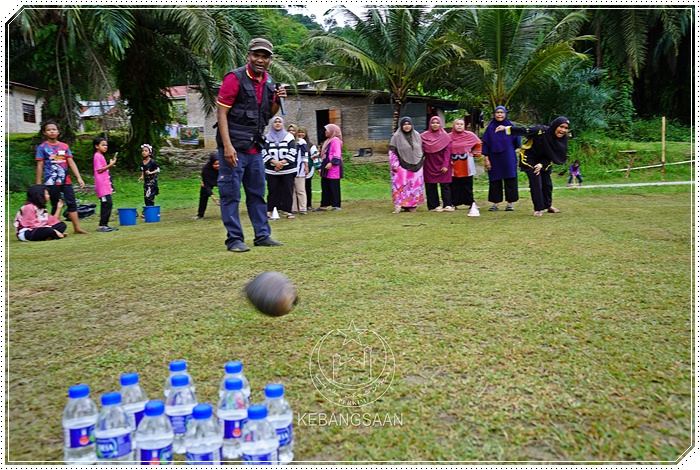
The coconut bowling activity specially organised for mothers.
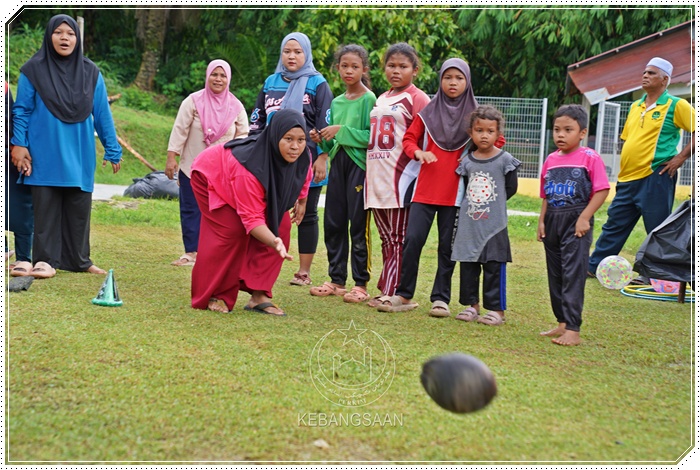
Village women tossing coconuts during the coconut bowling traditional games activity.
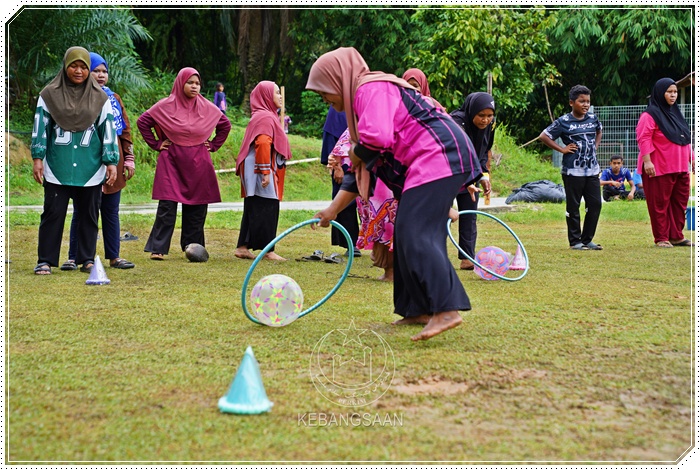
The hoop-and-ball activity participated in by the village women.
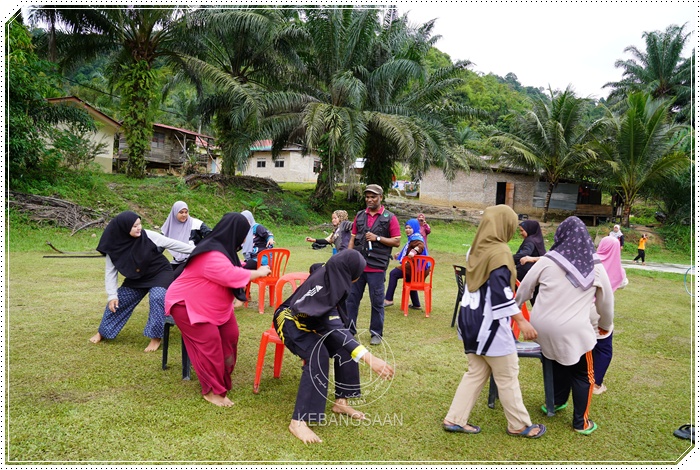
Musical chairs was among the most eagerly contested activities among the women.
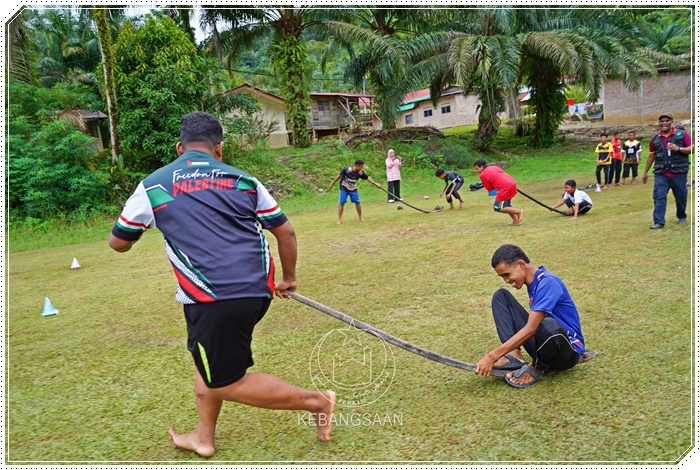
The men’s tarik upih competition was one of the most lively traditional events during the games session.
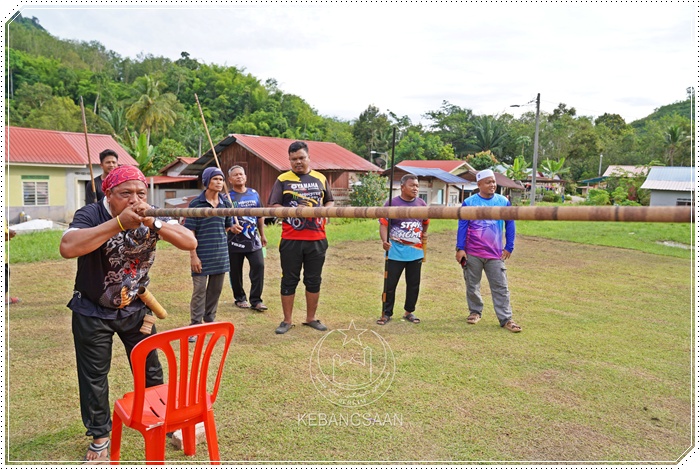
Blowpipe shooting is a traditional cultural activity passed down through generations within the Kampung Pisang community.
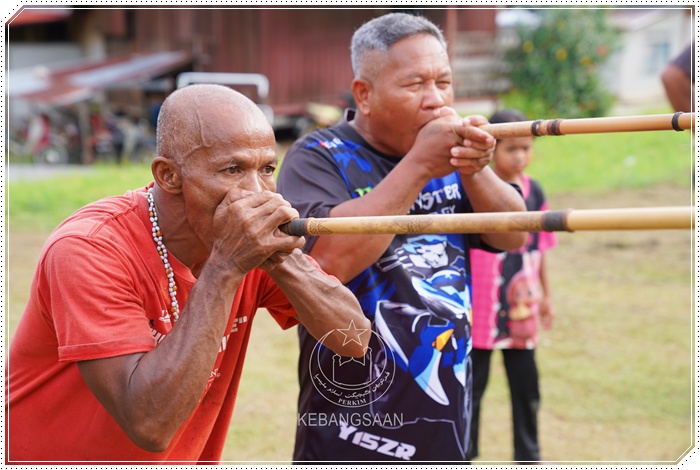
Villagers competing against one another during the traditional blowpipe games activity.
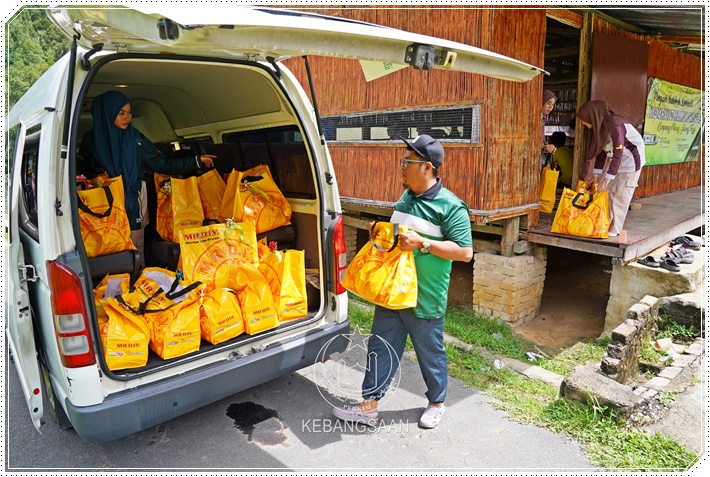
Secretariat members loading food aid supplies into a van for the house visitation programme.
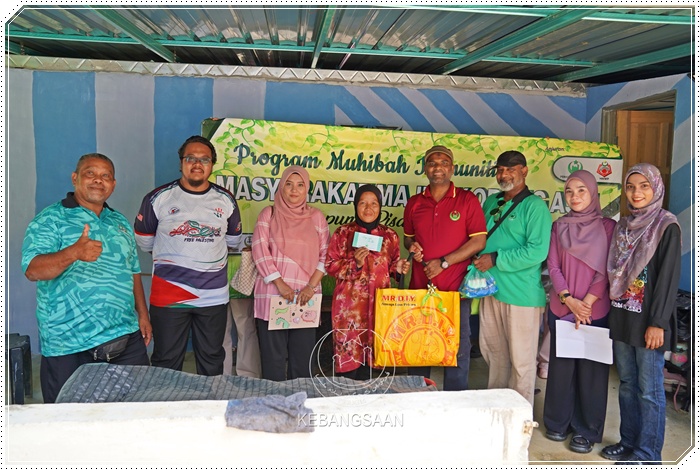
Villagers receiving food aid and token contributions sponsored by MAIWP, presented by Ustaz Jais Mariappan together with the secretariat and Tok Batin Nasiri.
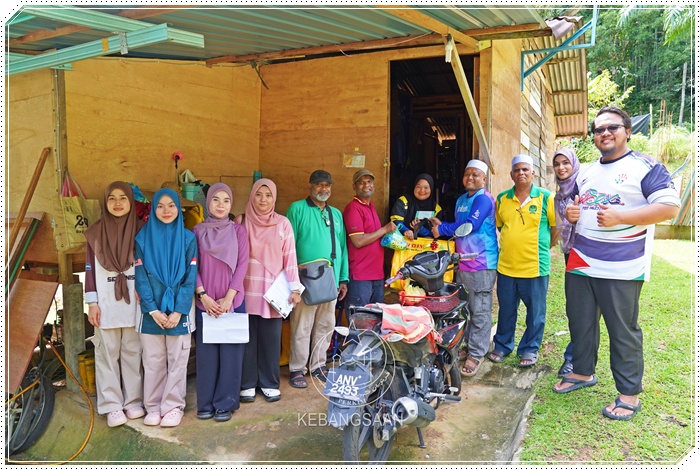
Ustaz Wan Mas Indra together with the visitation delegation presenting MAIWP-sponsored food aid and token contributions to recipients.
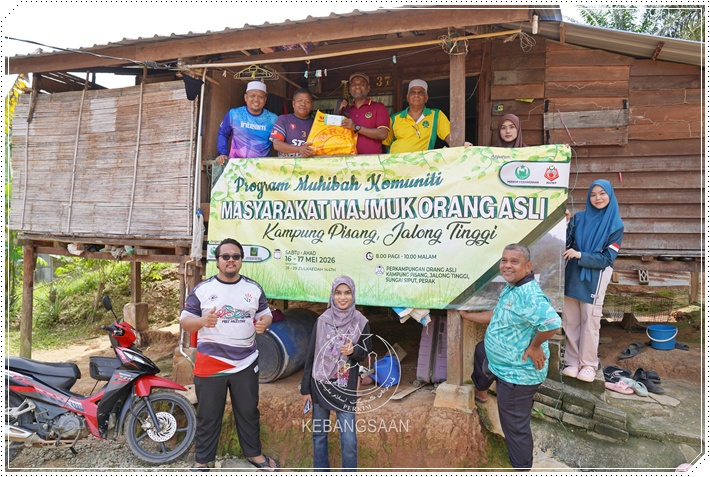
Orang Asli residents of Kampung Pisang receiving food aid and token contributions from MAIWP presented by Ustaz Jais Mariappan together with Tok Batin Nasiri and the visitation delegation.
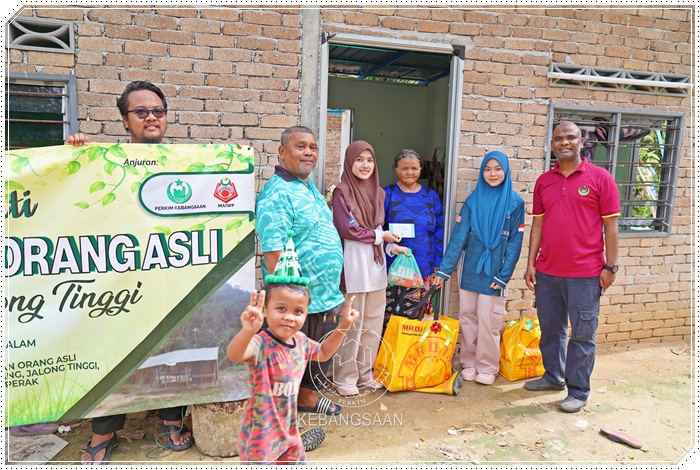
Two USIM industrial training students, Nurul ‘Izzah and Ummul, together with Tok Batin Nasiri and the secretariat, presenting MAIWP-sponsored food aid contributions to the villagers.
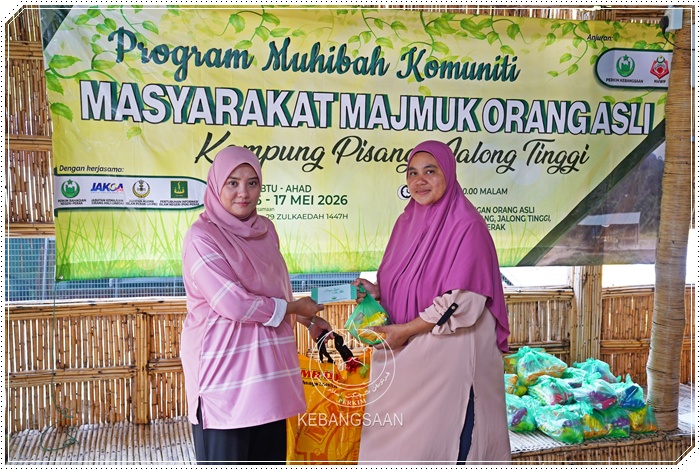
Azura also presented token contributions together with food aid sponsored by MAIWP to the villagers.
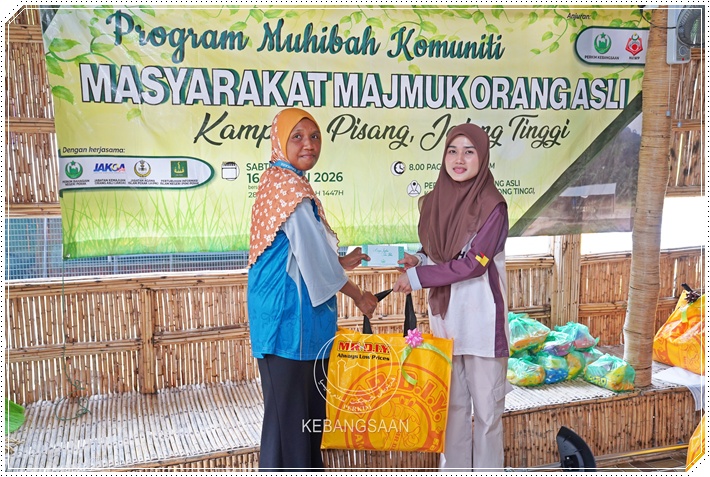
A Kampung Pisang resident receiving MAIWP food aid contributions from Nurul ‘Izzah.
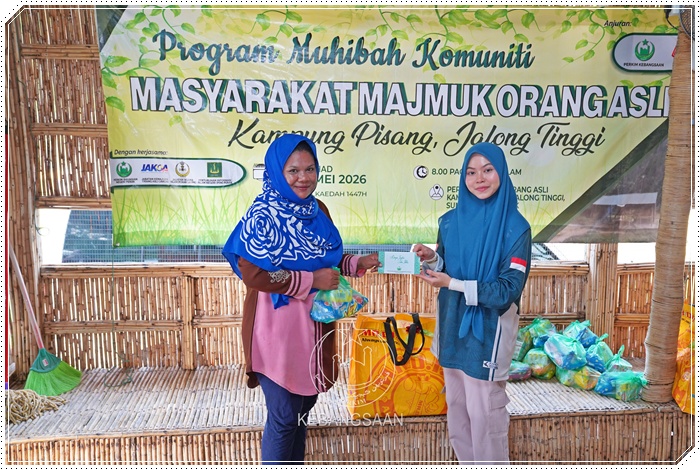
Ummul Murshida presenting token contributions and food aid items such as rice, cooking oil, flour, sugar and milk sponsored by MAIWP to the villagers.