PERKIM Empowers Muslim Convert Families Through Second Family Enrichment Workshop

by: MOHD. SYAHRIL ROSDI AHMAD ZAHUDI
KUALA LUMPUR, AUGUST 16, 2026 — Fifty-six Muslim converts from diverse ethnic and national backgrounds took part in the Second Muslim Convert Family Enrichment Workshop, jointly organised by the Muslim Welfare Organisation Malaysia (PERKIM) and the Federal Territories Islamic Religious Council (MAIWP) at Hotel Steg Kuala Lumpur, Jalan Tiong Nam, here, on Sunday morning.
The programme, which began at 8am, brought together participants of Chinese, Indian, Punjabi, Iban, Kadazan and Murut descent, as well as Muslim converts from the Philippines, Thailand, Indonesia, Cambodia and several other countries who are residing in Kuala Lumpur and Selangor.
The one-day workshop served as a platform to strengthen family institutions among Muslim converts through knowledge-sharing, family guidance and personal experiences, with the aim of nurturing more harmonious, resilient and Islam-centred convert families.
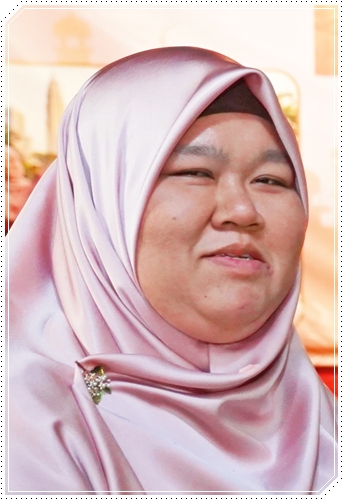 Programme coordinator Ustazah Siti Munirah Sayed Mohd Hamdan said the second edition of the workshop was not merely a platform for imparting knowledge, but also provided an avenue for building support networks that are crucial for Muslim converts as they navigate family life.
She said the participants comprised married couples where one spouse is a Muslim convert, as well as unmarried converts who are preparing to establish families based on Islamic principles.
“The participants come from diverse ethnic and cultural backgrounds, including Chinese, Indian, Sabah and Sarawak communities, as well as Filipinos and Indonesians residing in Kuala Lumpur and Selangor. Although they come from different backgrounds, they are united by the same faith and a shared aspiration to build strong Muslim families.
“I would like to express my highest appreciation to all parties who have consistently supported PERKIM by providing assistance, guidance and cooperation in making programmes such as this workshop a success since last year.
“We greatly value this commitment, which serves as a catalyst for the continuity of Muslim convert family development programmes.
“I hope every participant will attend all the sessions with an open heart, gain as much knowledge as possible, share their experiences and strengthen their confidence as they navigate family life.
“May the knowledge gained serve as a foundation for building families founded on sakinah, mawaddah and rahmah, and contribute towards nurturing strong, happy and blessed Muslim convert families,” she said.
The programme began with welcoming remarks by master of ceremonies Siti Masliana Mohd Ariffin, followed by an opening prayer led by Muslim convert Mohd Firdaus Pompeyos Abdullah.
The workshop then continued with a talk entitled “Reviving Love and Affection Between Husband and Wife”, delivered by Hushim Motivational & Counselling Consultancy (HMCC) founder and managing director Tuan Haji Hushim Haji Salleh.
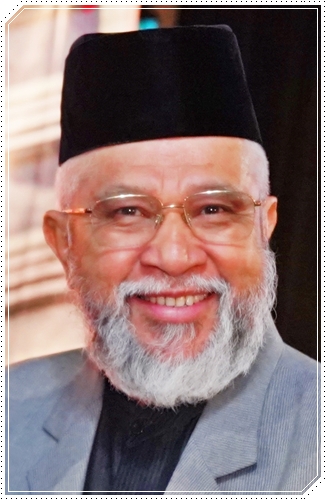
In his presentation, Hushim elaborated on Surah Ar-Rum, verse 21, which explains that Allah created spouses as a source of tranquillity and bestowed love and mercy between husbands and wives.
He, who is also a member of the PERKIM National Council, stressed that marriage is more than a bond between two individuals, but an institution built upon three fundamental pillars — sakinah (tranquillity), mawaddah (love and affection) and rahmah (mercy and compassion).
“Allah did not merely create spouses; He brings two hearts together through sakinah, mawaddah and rahmah. Marriage should be a shelter when facing the challenges of life, rather than a battlefield for conflict,” he said.
Hushim, who is also chairman of PERKIM Klang Branch, said among the main factors that cause marital relationships to lose their warmth after marriage are daily routines that gradually diminish intimacy, declining communication, failure to appreciate one’s spouse, a lack of compliments and the growing influence of social media, which increasingly replaces face-to-face communication.
He subsequently introduced the TIPS HUSHIM formula as a guide to restoring warmth and strengthening marital relationships.
The formula encompasses Tabah in facing challenges; Ingat important matters in one’s partner’s life; Pandai in winning one’s partner’s heart; Sungguh-sungguh in nurturing the relationship; Hayati marriage as a blessing from Allah; Ucapan of love and gratitude; Senda dan gurau to maintain joy and closeness; Hargai one’s partner; Intimkan the relationship; and Melakukan aktiviti bersama consistently.
He also reminded husbands to be protectors of their wives rather than acting as directors of the household, while cautioning them against comparing their wives with other women and urging them to guide their spouses with wisdom and compassion.
“Guide your wife with love because a woman who feels appreciated will love her husband wholeheartedly,” he said.
Wives, meanwhile, were encouraged to obey their husbands in matters permitted by Islamic law, safeguard their dignity and the family’s wealth, fulfil their spouse’s rights and build their households on mutual respect and complementarity.
He also highlighted the importance of sincere communication between spouses, encouraging couples to express appreciation and affection, cultivate a habit of complimenting one another and revive the romantic moments that are often forgotten after years of marriage.
According to him, couples should also understand the impact of past experiences and childhood trauma, which may influence a person’s emotions within a marriage. Empathy, compassion and a willingness to listen, he said, are essential in healing emotional wounds and strengthening family relationships.
Among his key messages to husbands was the need to be protectors rather than directors, avoid comparing their wives with others and refrain from judging weaknesses that can still be guided and improved.
For wives, he reiterated the importance of obeying their husbands in matters of goodness, protecting their dignity and their husbands’ property, and nurturing the marriage to the best of their ability.
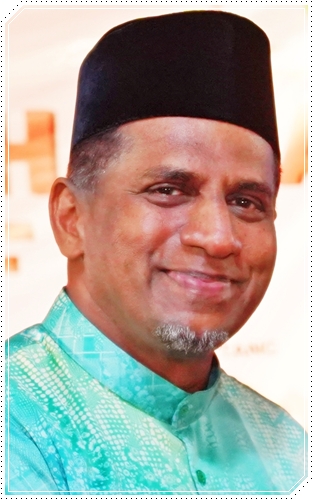
Meanwhile, PERKIM Deputy President Ustaz Haji Muhammad Fitri Abdullah, who officiated the workshop, stressed the importance of mutual understanding between spouses, particularly in marriages involving couples from different cultural and social backgrounds.
He said while marriage partners are part of Allah’s divine decree, sustaining a household requires continuous effort to understand one’s spouse, particularly when differences exist in culture, life experiences, lifestyles and family backgrounds.
Fitri, who is also chairman of PERKIM Selangor State Division, encouraged Muslim converts to bring their Muslim-by-birth spouses to programmes of this nature so that both partners could develop a better understanding of the challenges faced by convert families.
“When one embraces Islam, sometimes figuring out how to live together is not easy,” he said, stressing that many conflicts in interfaith and intercultural marriages stem from a failure to understand one another.
He also shared personal experiences of building a household with a spouse from a non-Muslim family, including how positive relationships with in-laws can be developed through love, respect and wisdom.
According to him, couples must learn to complement each other rather than expect perfection within a short period.
“Give it some time. The most important thing is mutual understanding,” he said.
He also reminded participants that a husband’s role as the head of the family does not mean being the “boss”, but rather serving as a guide who helps his spouse move towards what is good and beneficial for the family.
In the context of Muslim convert families, he said, knowledge of a spouse’s psychology, emotional changes and physical circumstances is also important, as a failure to understand seemingly minor aspects of married life can eventually develop into larger conflicts.
One of the most poignant messages from Fitri was the importance of focusing on a spouse’s strengths rather than constantly counting their shortcomings.
He said married life should be built upon gratitude, love and continuous prayer.
Among the practices he recommended was praying sincerely for one’s spouse without necessarily letting the spouse know.
“Do not focus on their shortcomings. Instead, look at the strengths and goodness they possess,” he said, while praying that the marriages built by the participants would last until Jannah.
He also reminded Muslim convert couples to exercise wisdom when communicating with family members who have yet to embrace Islam, particularly when discussing matters relating to religion.
A harsh or judgmental approach, he said, could only create distance, whereas Islam teaches its followers to convey messages with wisdom while continuing to safeguard family ties and feelings.
The workshop concluded with a final session entitled “Sharing Through Art”, conducted by HMCC registered counsellor Hajah Rashidah Ahmad.
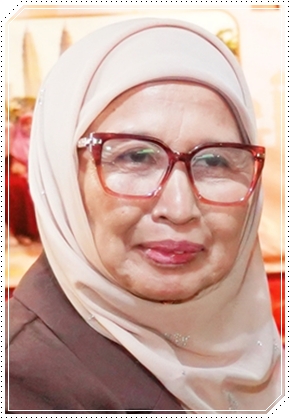
Rashidah said art therapy is an approach used to assist, support, treat and help individuals recover through a professional relationship between clients and counsellors.
The session focused on the importance of self-care, mental well-being and emotional management in everyday life.
Participants were also guided through relaxation techniques involving controlled breathing to help them achieve a calmer, more relaxed and refreshed state.
They were subsequently given drawing and colouring exercises involving objects such as houses, trees, rivers, people, mountains and landscapes, before sharing their artwork and experiences with fellow participants.
Rashidah, a former counselling manager at Tabung Haji, also encouraged participants to seek social support from family members, friends and trusted individuals, consult counsellors when necessary and cultivate positive emotions in their daily lives.
She stressed that sharing through therapy must be conducted within a professional framework and should not be used to label individuals or make arbitrary diagnoses.
The one-day workshop demonstrated a holistic approach to strengthening Muslim convert families, addressing not only religious knowledge and husband-wife relationships but also emotional well-being, communication and psychological welfare.
The programme also provided participants with an opportunity to appreciate that family life requires continuous learning, particularly for couples navigating the transition of embracing Islam while dealing with differences in cultural and social backgrounds.
At the conclusion of the programme, Fitri, accompanied by Hushim, presented tokens of appreciation and food aid to the participating Muslim convert couples.
Fitri also presented PERKIM commemorative plaques and gifts to both speakers before the programme concluded with a group photograph and lunch.
Also present were PERKIM National Secretariat Affairs Officer Azura Abdul Rahman, Norlailialpin Suratman and Mu’alish Shah Mohd Anuar.
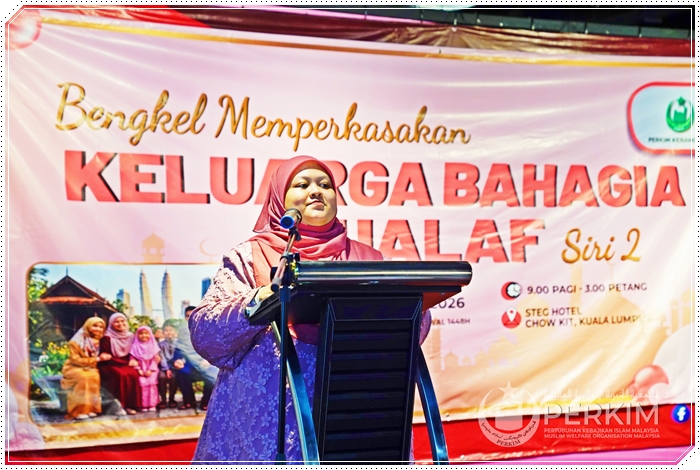
Siti Masliana delivers the welcoming remarks as the master of ceremonies.
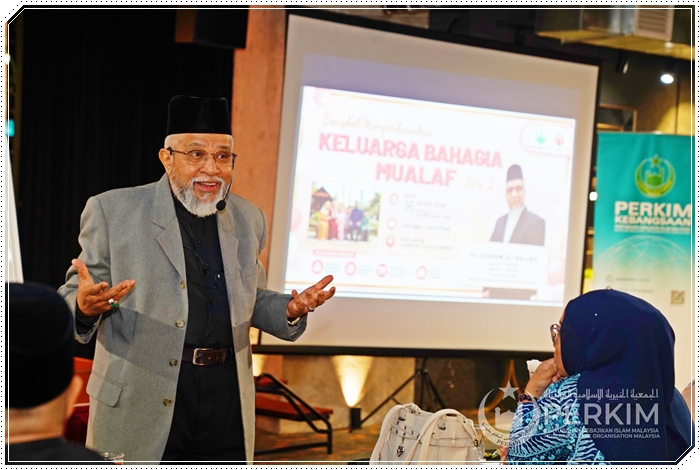
Haji Hushim emphasises that marriage is not merely a bond that unites two individuals, but an institution built upon three fundamental principles: sakinah, mawaddah and rahmah.
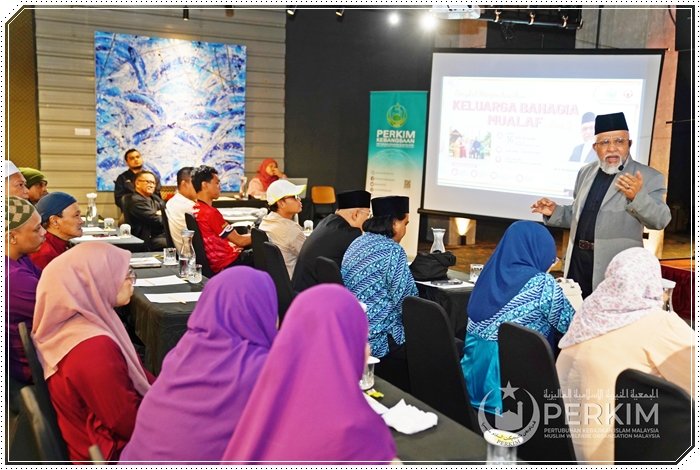
Haji Hushim also reminds husbands to be protectors of their wives rather than acting as directors of the household.
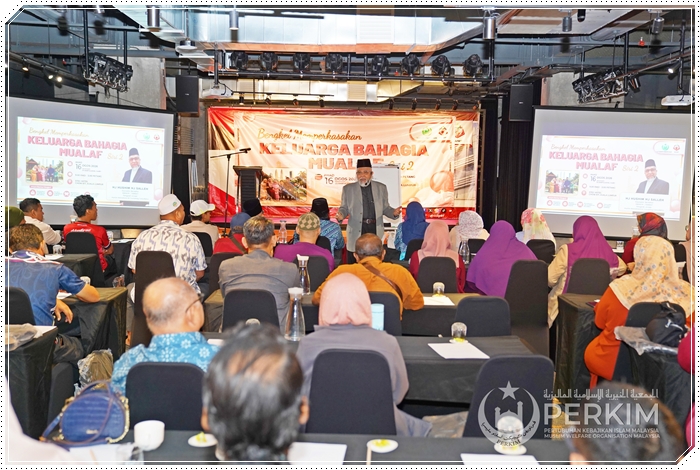
Haji Hushim also stresses the importance of sincere communication between spouses, encouraging couples to express appreciation and affection while cultivating a culture of complimenting one another.
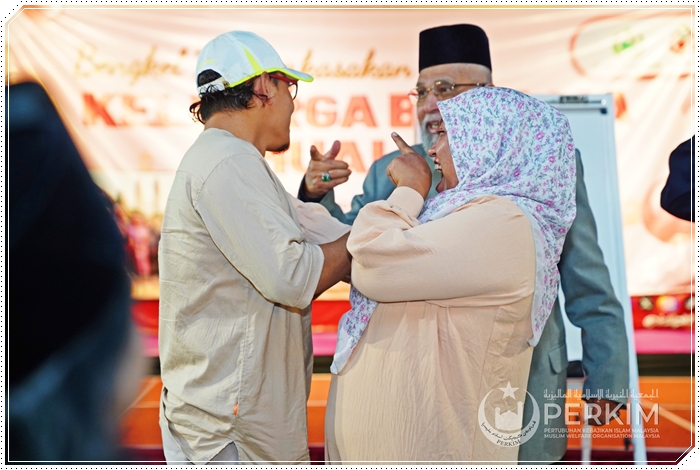
Some of the heartwarming moments shared by the participating couples as they were invited to express words of affection towards one another.
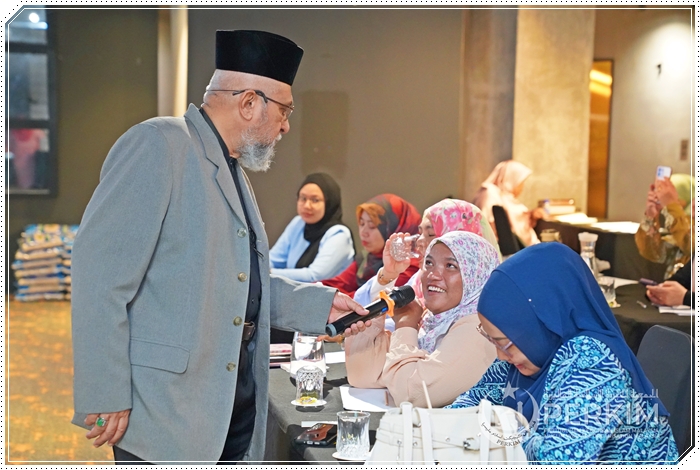
Haji Hushim interviews one of the participants.
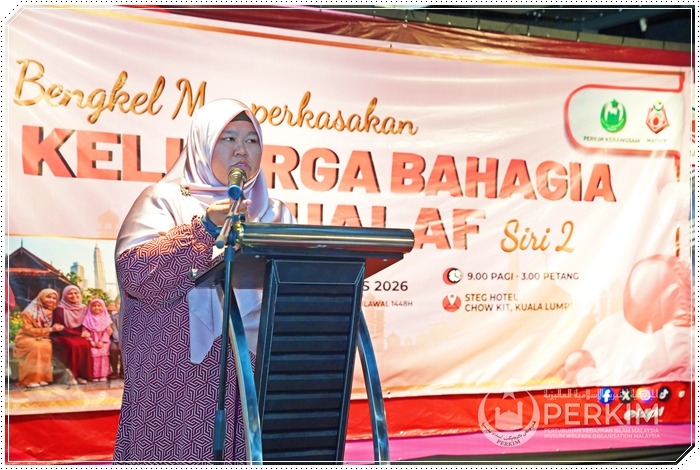
Siti Munirah delivers her welcoming address as the programme coordinator.
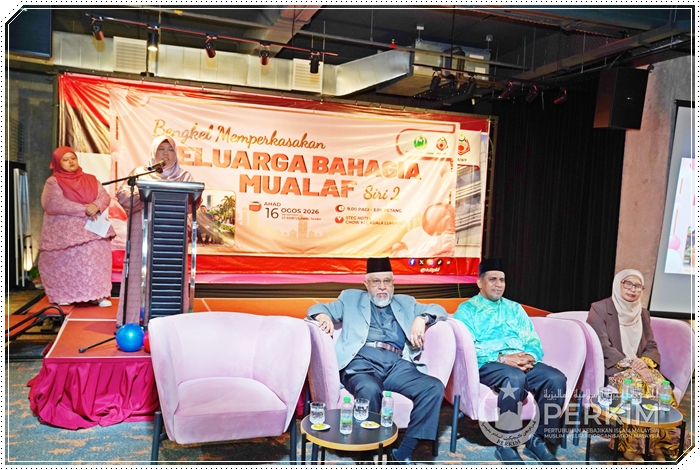
Siti Munirah hopes that every participant will attend all the sessions with an open heart, gain as much knowledge as possible and strengthen their confidence in navigating family life.
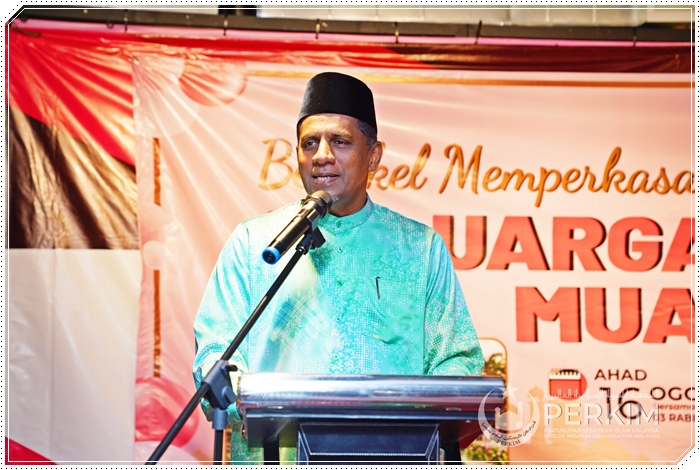
Ustaz Fitri delivers the opening address in his capacity as Deputy President of PERKIM.
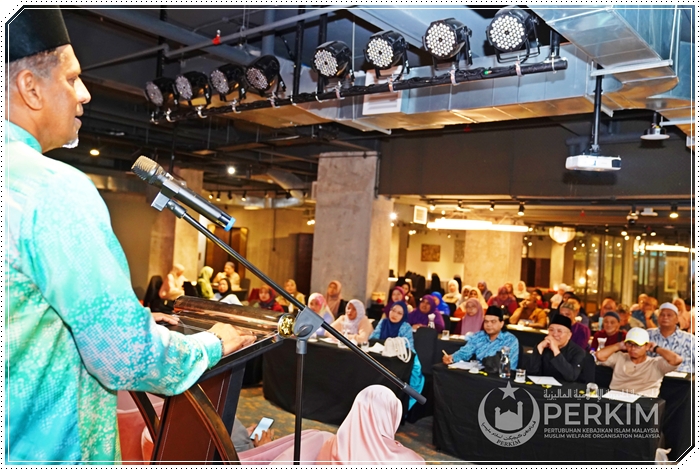
Ustaz Fitri also shares his personal experience of building a family with a spouse from a non-Muslim family background.
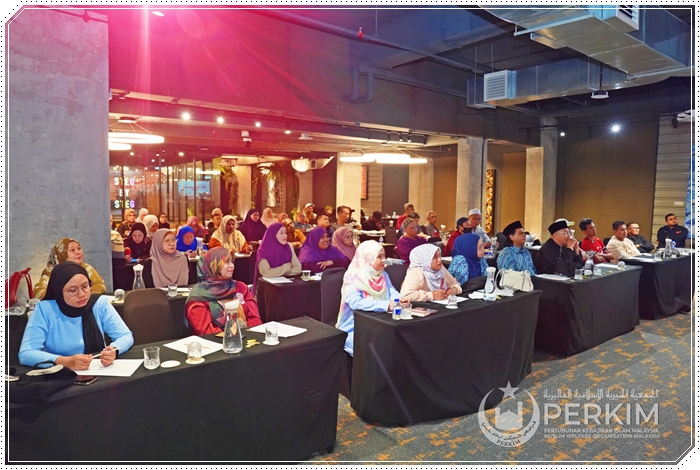
The 56 participants listen attentively and benefit from the knowledge shared during the workshop.
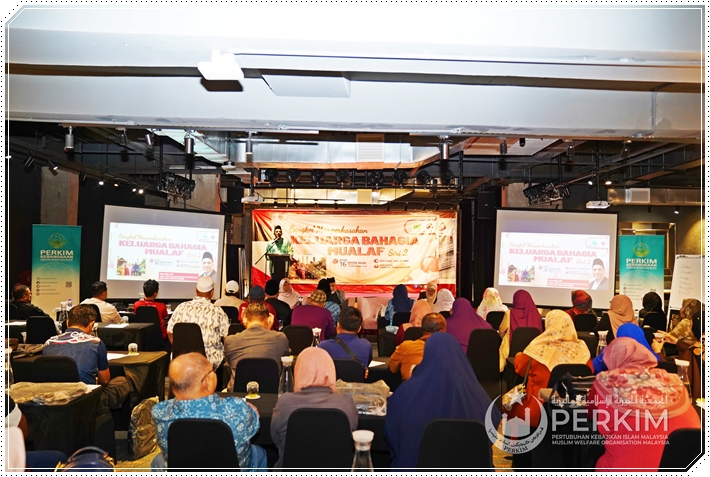
According to Ustaz Fitri, married life should be built upon gratitude, love and continuous prayer.
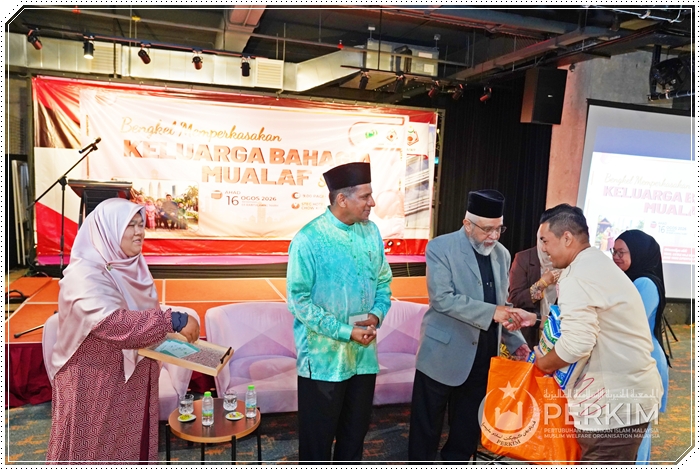
Haji Hushim presents tokens of appreciation and essential food supplies to the participating couples.
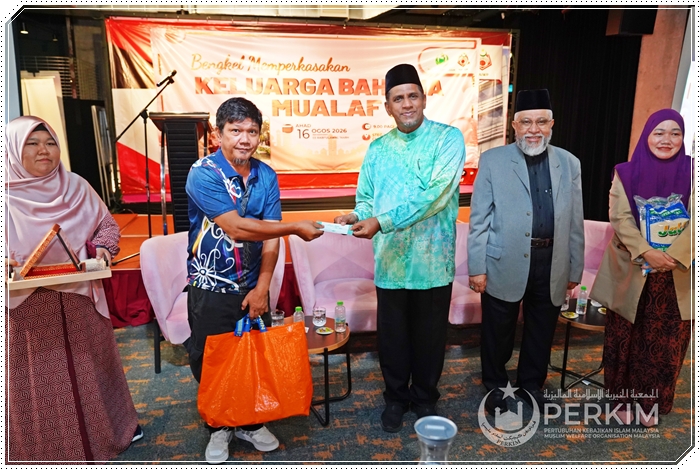
Muslim convert couples receive tokens of appreciation and essential food supplies from Ustaz Fitri.
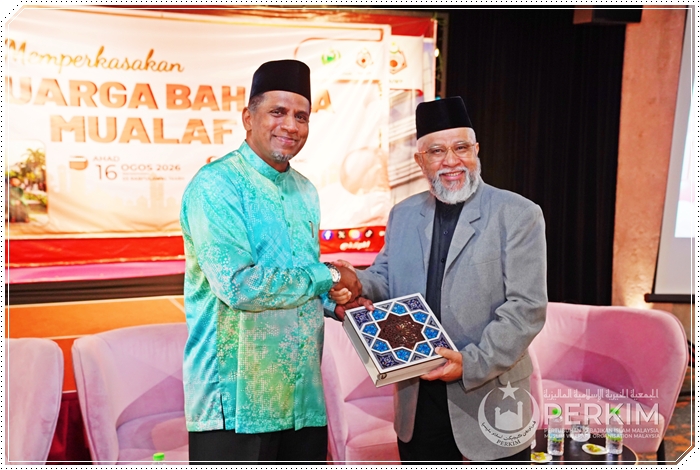
Ustaz Fitri presents a commemorative gift to Haji Hushim.
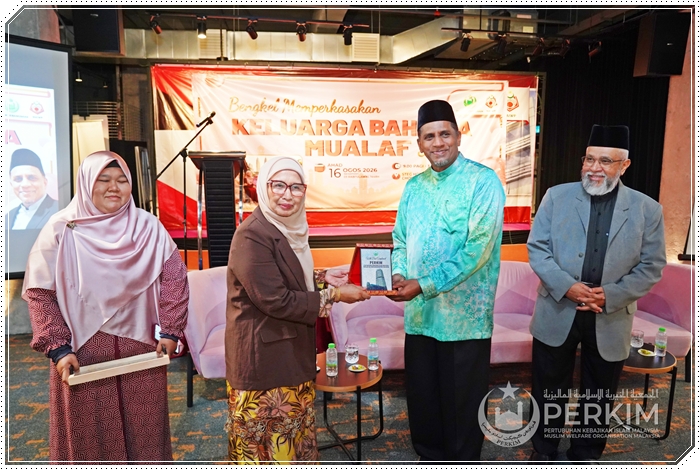
Ustaz Fitri presents a PERKIM commemorative plaque to Hajah Rashidah.
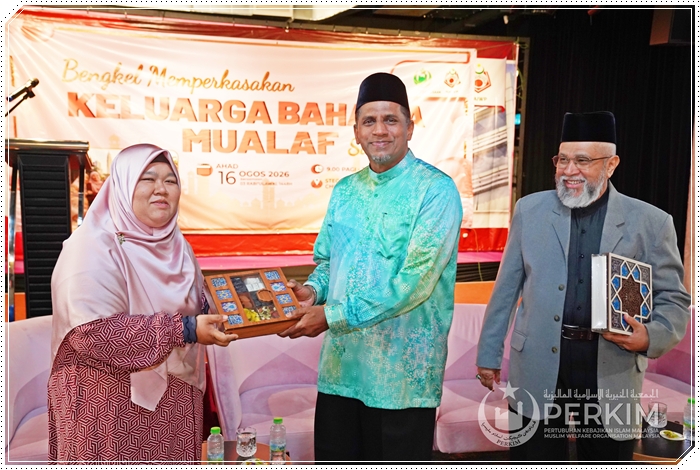
Siti Munirah presents a commemorative gift to Ustaz Fitri as the officiating guest.
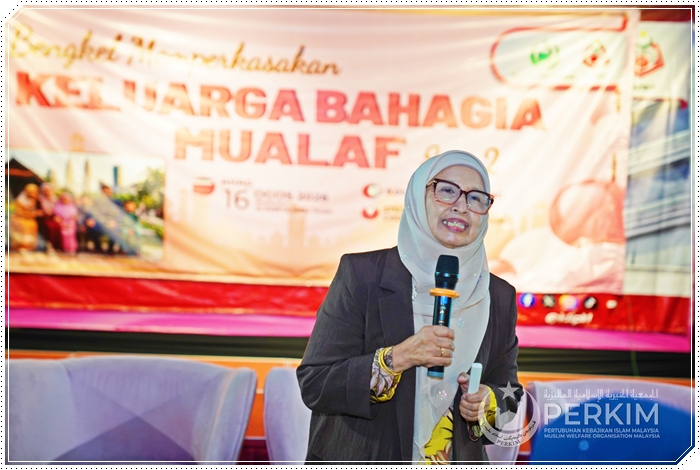
Hajah Rashidah conducts her session, entitled ‘Sharing Through Art Therapy’.
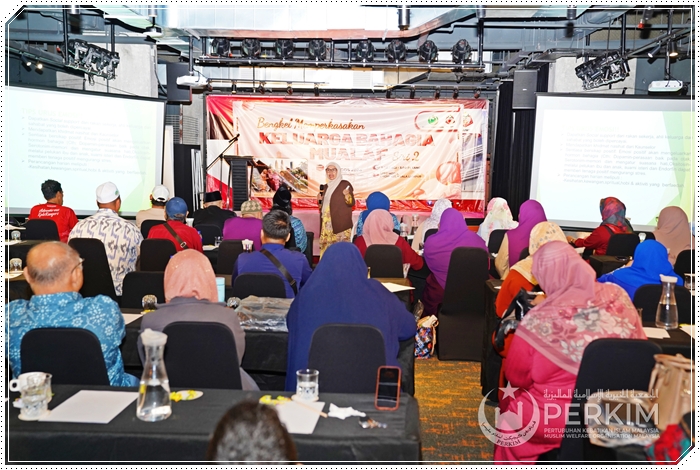
Hajah Rashidah emphasises the importance of self-care, mental well-being and emotional management in everyday life.
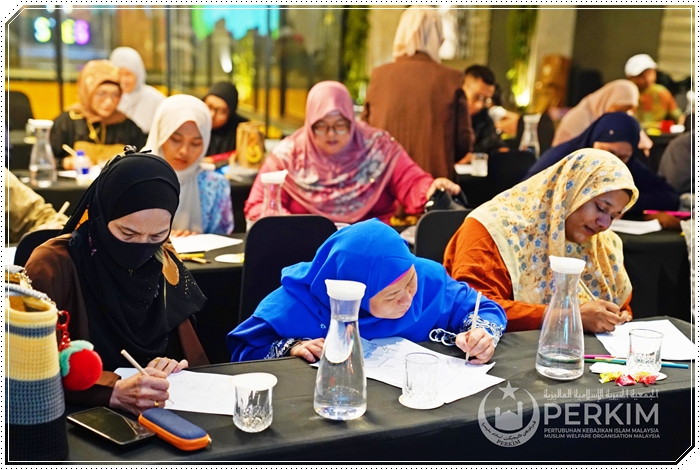
Participants are given drawing and colouring exercises involving objects such as houses, trees, rivers, people, mountains and landscapes.
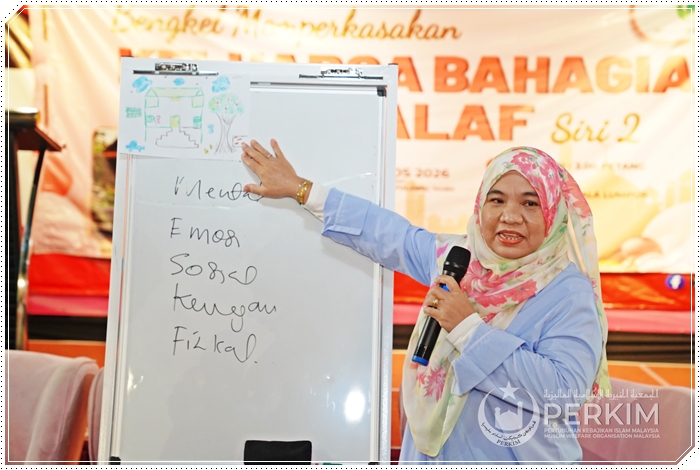
A participant presents and explains the outcome of the art therapy exercise.
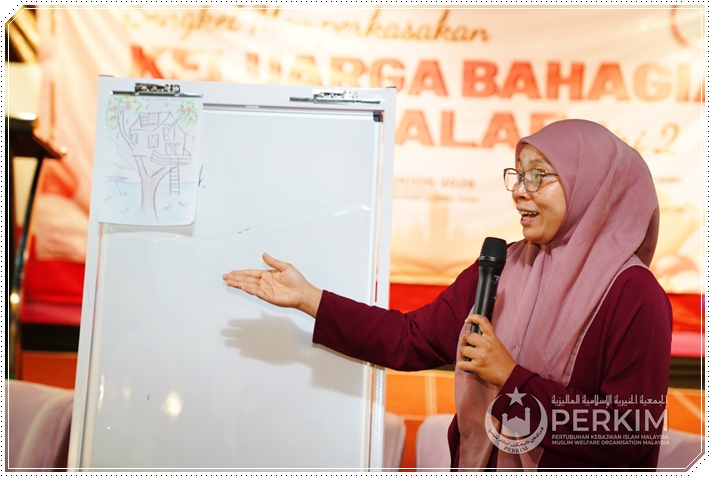
A participant showcases the artwork and shares their personal interpretation of it.
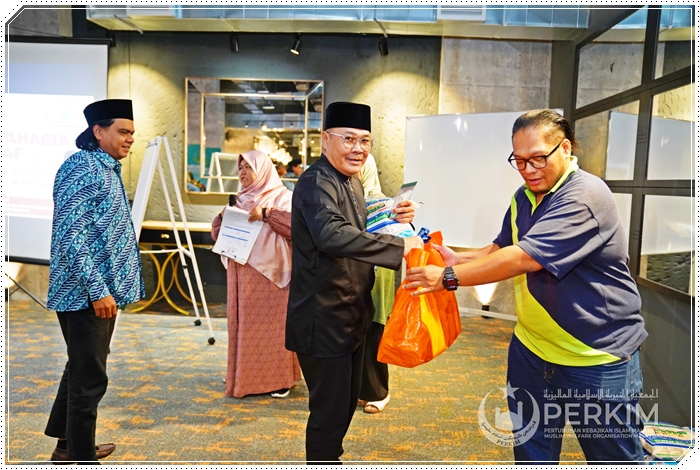
Mualish Shah presents food supplies to the Muslim convert couples.
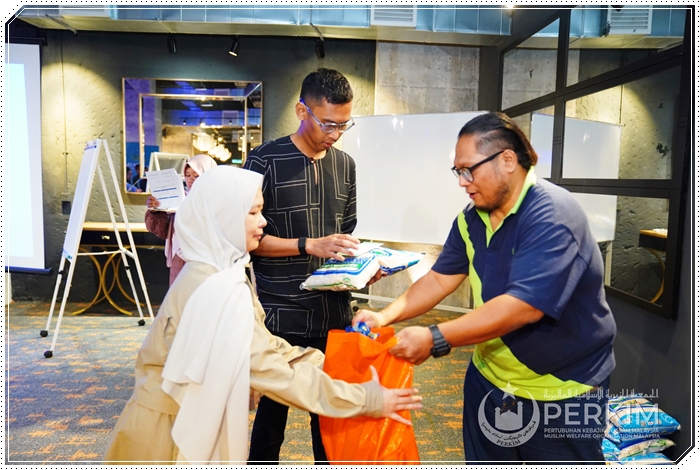
Muslim convert couples receive bags containing essential food supplies from the organising secretariat.
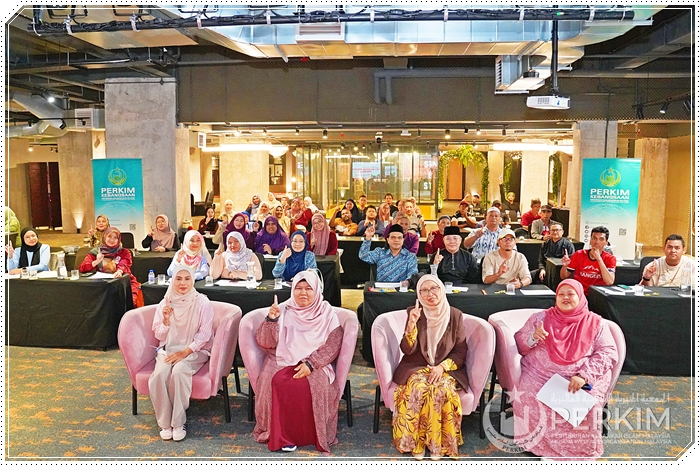
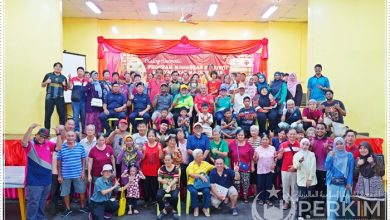
The organising secretariat poses for a commemorative photograph with participants of the Second Muslim Convert Family Enrichment Workshop at the conclusion of the programme.