Intensive Women’s Fiqh Course Strengthens New Muslims’ Understanding Of Aurat and Dignity

ᵇʸ: ᴹᴼᴴᴰ. ˢʸᴬᴴᴿᴵᴸ ᴿᴼˢᴰᴵ ᴬᴴᴹᴬᴰ ᶻᴬᴴᵁᴰᴵ
KUALA LUMPUR, AUGUST 15, 2026 — Understanding the Islamic guidelines on aurat, social interaction and appropriate Muslimah attire must continue to be strengthened among new Muslims to ensure that the requirements of Islamic law are properly understood and practised in their daily lives.
This was the focus of the Intensive Women’s Fiqh Course Series 4, jointly organised by the Muslim Welfare Organisation Malaysia (PERKIM) National and the Federal Territories Islamic Religious Council (MAIWP), which brought together 30 participants at the Seminar Hall, Level 1, PERKIM Building, Jalan Sultan Azlan Shah, here, on Saturday morning.
Beginning at 8am, the programme brought together new Muslims from diverse backgrounds, including those of Chinese, Iban, Kadazan and Murut descent, as well as participants from the Philippines, Thailand and Indonesia.
The diversity of the participants’ backgrounds transformed the course into more than simply a platform for knowledge-sharing, providing instead a structured avenue for strengthening their understanding of Islam as they gradually build their lives around faith and Islamic principles.

Programme coordinator, Fatin Hamizah Ismail said the series of Intensive Women’s Fiqh Courses was designed to provide participants with a structured, practical and relevant understanding of issues concerning Muslim women and their everyday experiences.
“The programme is designed not merely to enable participants to know a particular ruling, but also to understand the basis and wisdom behind Islamic requirements and to practise them confidently in their daily lives.
“Our participants come from diverse backgrounds and experiences. Therefore, a gradual approach is important to ensure that the knowledge imparted can be understood, internalised and practised with confidence,” she said.
Fatin Hamizah said the first series introduced participants to Women’s Fiqh of Worship, particularly rulings concerning the daily lives of Muslim women to ensure that their practices were aligned with authentic Islamic teachings.
“The second series focused on matters relating to women’s bleeding, while the third series explored Islamic jurisprudence concerning marriage and its related rulings.
“For the fourth series, we focused on Women’s Fiqh of Aurat, an issue that is closely connected to the daily lives of every Muslim woman,” she said.
The fourth series began with the proceedings being hosted by Ustazah Siti Munirah Syed Mohd Hamdan, followed by an opening prayer led by Ustazah Norlailialpin Suratman.

The main session was delivered by independent preacher Ustazah Nur Azila Shamsudian, who provided an extensive discussion on women’s aurat from various perspectives, including clothing, the hijab, adornment, the workplace, sports, social media, prayer and interpersonal interaction.
During the session, Ustazah Azila Shamsudian explained that aurat does not merely refer to clothing that covers the body, but is closely associated with dignity, modesty and a Muslim woman’s obedience to the commands of Allah SWT.
She reminded participants that observing aurat was not about portraying women as inferior or restricting them, but was instead part of preserving their dignity, honour and the boundaries prescribed by Islamic law.
“Beauty is part of human nature. Observing aurat is an act of worship. We are not shutting ourselves away from the world, but protecting ourselves because we understand our value in the sight of Allah,” she said.
She also referred to Surah Al-Nur, verse 31, which instructs believing women to lower their gaze, guard their chastity and not display their adornments except what is ordinarily apparent.
Ustazah Nur Azila stressed that wearing clothing that covers the body does not necessarily fulfil all the requirements of observing aurat if the clothing is excessively tight, transparent, revealing of the body’s shape or fails to cover the prescribed areas.
Among the aspects that require attention, she said, were ensuring that the hair, ears, neck, nape and chest were properly covered when wearing the hijab.
“Covering the hair alone does not mean everything has been fulfilled. The hijab should also cover the neck and chest. We need to look at the overall appearance, rather than focusing on just one aspect,” she said.
On Muslimah clothing and fashion, Ustazah Nur Azila stressed that Islam does not prevent women from looking beautiful, neat and fashionable.
Instead, she said, fashion should remain within the boundaries prescribed by Islamic law.
She advised participants to choose clothing that properly covers the aurat, is loose-fitting, non-transparent, modest and appropriate for the setting and circumstances.
“Trends change every year, but the principles of Islamic law do not. We can keep up with fashion without compromising our aurat,” she said.
Participants were also introduced to a simple checklist before leaving home: “Cover, Loose, Opaque, Modest, Appropriate for the Setting and Intention for Allah.”
According to her, the formula could serve as a practical guide for Muslim women to assess their attire before stepping outside their homes.
The session also addressed the issue of aurat in the presence of non-mahram men, among women, in the presence of mahram relatives and between spouses, as well as the requirements concerning aurat during prayer.
According to the Shafi‘i school of thought, which is predominantly followed by Muslims in Malaysia, a woman’s entire body is considered aurat during prayer except for the face and palms. Participants were reminded to pay particular attention to areas such as the hair and neck, as well as parts of the body that could inadvertently become exposed during bowing or prostration.
She also explained that the requirements governing aurat have specific considerations when women are in the presence of mahram relatives and among other women.
“Even when someone is our mahram, it does not mean that we can dress without boundaries. Adab, modesty and dignity must still be observed,” she said.
At the same time, she stressed that there is no prescribed aurat boundary between husband and wife, although mutual respect and propriety remain important aspects of marital conduct.
The importance of educating children about aurat was also highlighted, with participants encouraged to teach children from an early age about bodily boundaries, privacy and the etiquette of seeking permission.
She referred to Surah Al-Nur, verse 58, which teaches about three specific times when children and those under their care should seek permission before entering their parents’ private spaces.
She said such education was important to help children understand that certain parts of the body must be protected and respected.
“Education about aurat should not begin only when a child reaches adolescence. It should be cultivated gradually from an early age through appropriate examples, language and age-appropriate guidance,” she said.
The discussion also extended to contemporary challenges, including clothing during sports, at the workplace and appearances on social media.
She reminded participants that aurat remains an important consideration when photographs of Muslim women are uploaded to social media and may be viewed by non-mahram men.
Among the things to avoid, she said, were photographs that exposed aurat, clothing that was excessively tight or transparent, and appearances that deliberately emphasised body shape or excessive adornment.
At the same time, participants were reminded that observing aurat extends beyond clothing and encompasses one’s gaze, speech, movements, adornments, use of fragrance, manner of walking and social interactions.
She again referred to Surah Al-Nur, verse 31, which prohibits women from striking their feet in a manner intended to reveal concealed adornments.
Concluding the session, Ustazah Nur Azila urged participants to view the observance of aurat from a broader perspective — as an expression of obedience and modesty before Allah SWT.
She also reminded participants that modesty is part of faith and should be reflected in everyday life, including when no one else is watching.
“Aurat is not merely a piece of cloth that covers the body. Aurat is a sign that we respect Allah’s command. We observe aurat not because we are not beautiful, but because we understand that beauty is a trust,” she said.
She further emphasised that every woman’s beauty is a blessing from Allah SWT and should be appreciated appropriately, including by choosing the right setting and circumstances in which to adorn oneself.
In this regard, she reminded participants that beauty and fashion should never become reasons for neglecting the boundaries prescribed by Islamic law.
The course also featured an interactive question-and-answer session between participants and Ustazah Nur Azila, allowing them to seek direct clarification on practical fiqh issues concerning aurat encountered in their daily lives.
Several participants who posed questions were presented with gifts by the speaker in recognition of their active participation.
Towards the end of the course, participants were divided into four groups to undertake activities related to the Fiqh of Aurat through a group learning exercise.
The activity was facilitated by four facilitators — Ustazah Fatin Hamizah, Ustazah Siti Munirah, Ustazah Norlailialpin and Ustazah Siti Masliana Mohd Ariffin.
Also assisting with the programme was secretariat member Mohd Aizat Rosli.
The group activity gave participants an opportunity to apply the knowledge acquired throughout the course through discussions and the analysis of questions based on real-life situations involving aurat and the everyday experiences of Muslim women.
The programme concluded with a commemorative group photograph involving participants and the organising team, followed by a lunch reception.
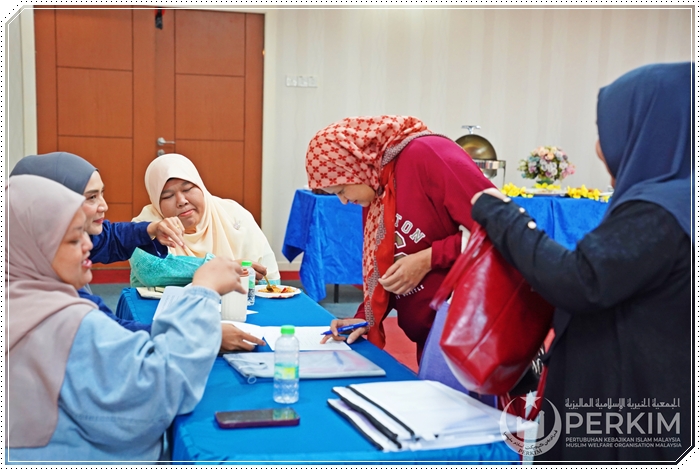
New Muslim participants filling in registration forms for the Intensive Women’s Fiqh Course Series 4.
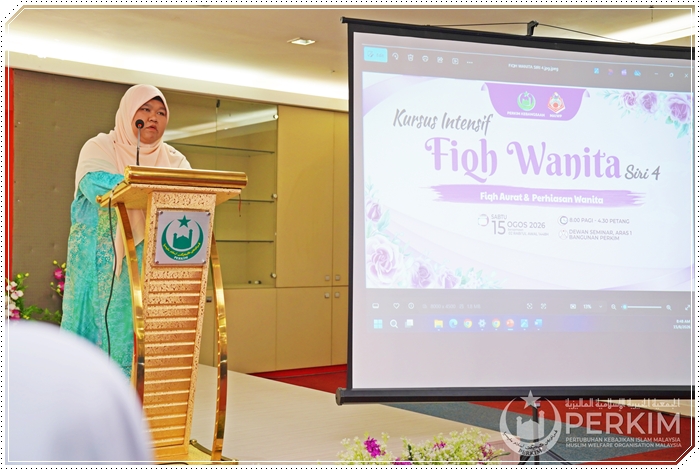
Ustazah Munirah, who served as the master of ceremonies, welcoming participants to the course.
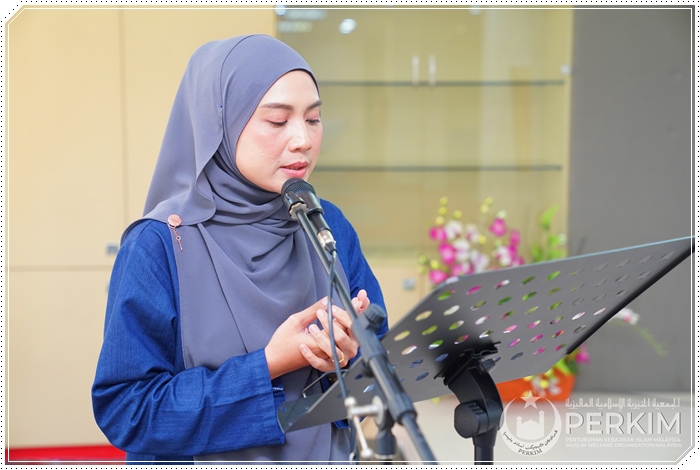
Ustazah Laili leading the opening prayer at the course.
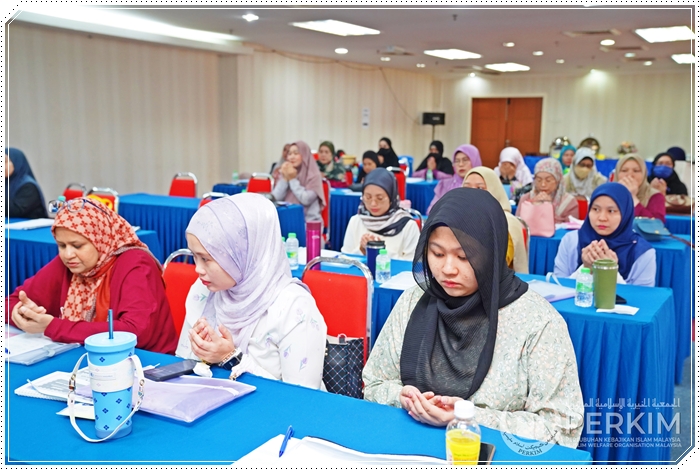
Participants raising their hands in supplication as the prayer was recited.
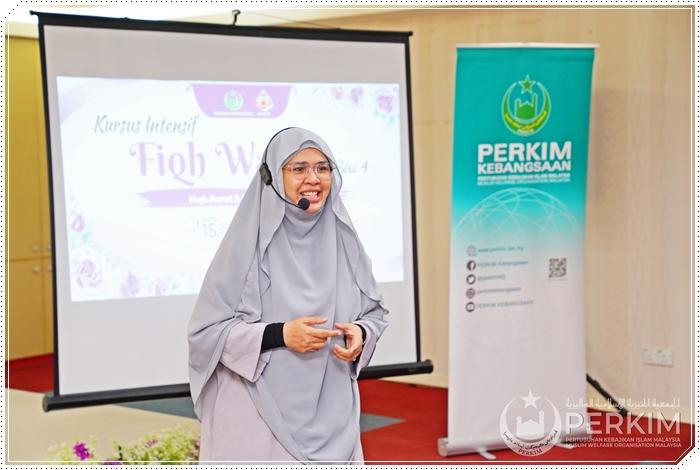
Ustazah Nur Azila explaining that aurat does not merely refer to clothing that covers the body, but is closely associated with dignity and modesty.
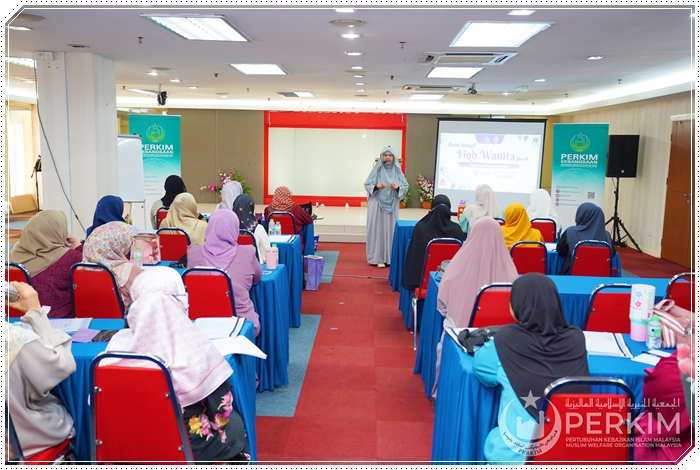
Ustazah Azila emphasising the Fiqh of Women’s Aurat before 30 participants.
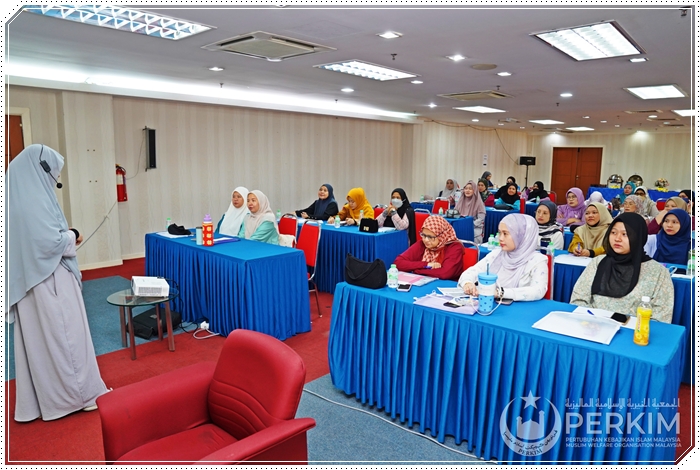
Ustazah Azila reminding participants that matters concerning aurat must also be taken into consideration when a Muslim woman’s photographs are uploaded to social media and may be viewed by non-mahram men.
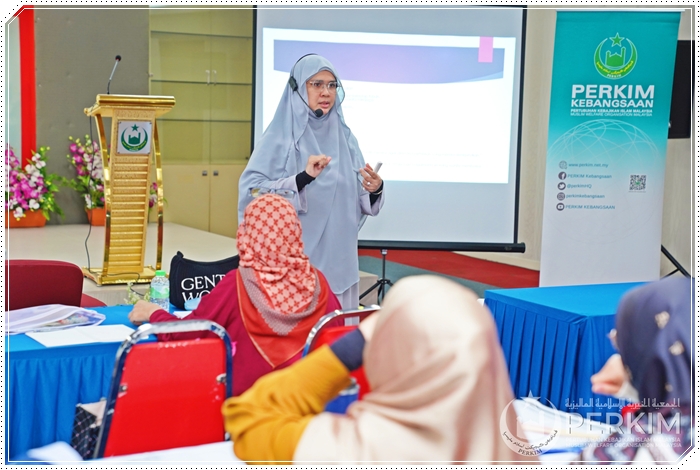
Participants were also reminded that observing aurat is not merely about clothing, but also encompasses one’s gaze, speech, movements, adornments, use of fragrance, manner of walking and social interactions.
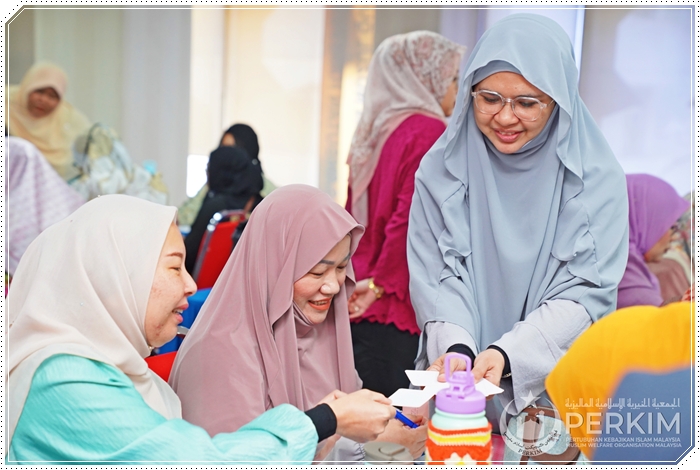
Ustazah Azila presenting a motivational card containing inspirational messages to a participant.
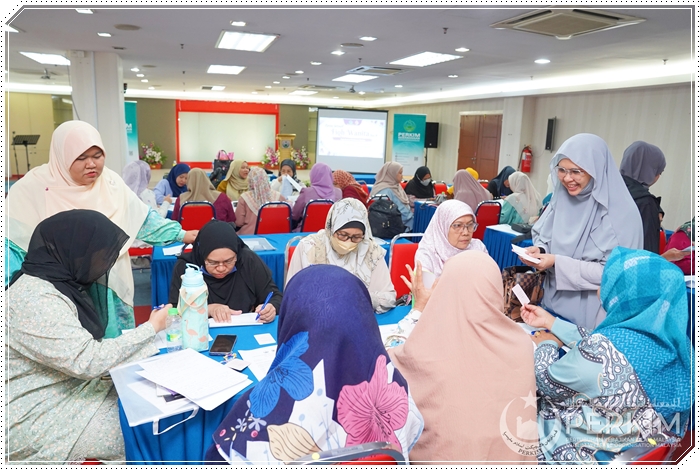
Participants carrying out tasks related to the Fiqh of Aurat through a group learning activity, with the assistance of facilitators.
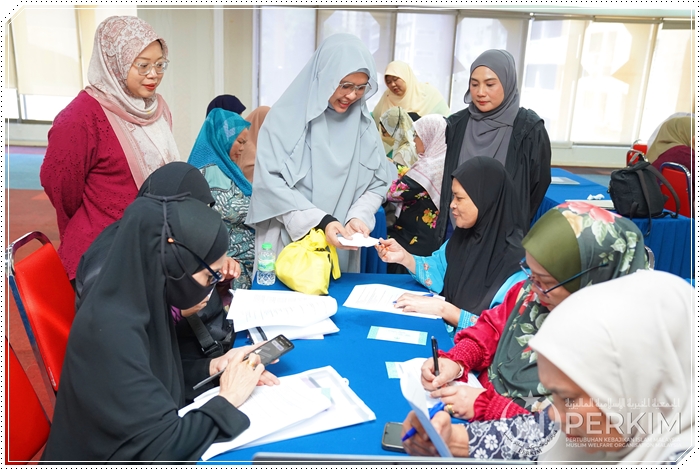
Ustazah Azila presenting several motivational cards to participants as they carried out the assigned tasks.
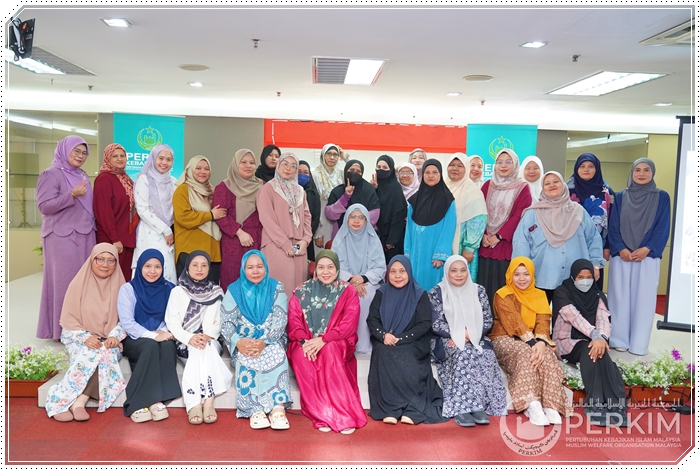
The 30 participants of the Intensive Women’s Fiqh Course Series 4 posing for a commemorative group photograph with Ustazah Azila and the facilitators at the conclusion of the course.