UIS Presents Research Publication on “Developing a Professional Mualaf Model as Da’wah Advocates” to PERKIM
ᵇʸ: ᴹᴼᴴᴰ. ˢʸᴬᴴᴿᴵᴸ ᴿᴼˢᴰᴵ ᴬᴴᴹᴬᴰ ᶻᴬᴴᵁᴰᴵ
KUALA LUMPUR, APRIL 7, 2026 – Efforts to strengthen da’wah among the mualaf (new Muslim) community have taken a significant step forward with the development of a comprehensive, research-based model through a strategic collaboration between Selangor Islamic University (UIS) and the Muslim Welfare Organisation Malaysia (PERKIM).
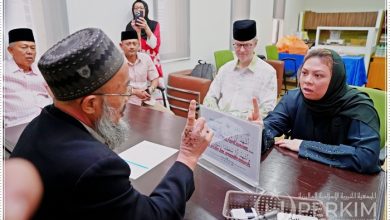
The handover ceremony of the research publication titled “Developing a Professional Mualaf Model as Da’wah Advocates” was held today at the Level 4 Meeting Room of the PERKIM Building here, marking an important milestone in advancing a more inclusive and structured approach to Islamic human capital development.
PERKIM National Administration Director, Dr Suariza @ Hidayah Muhammad, welcomed the UIS delegation led by Director of the Research Centre, Associate Professor Dr Mariam Abd Majid, accompanied by research assistant Nurshamira Abdullah.
The research collaboration stemmed from a Memorandum of Agreement (MoA) signed between UIS and PERKIM on January 9, 2024, with a joint funding allocation of RM20,000 contributed by both parties.
The study involved 10 informants, seven subject-matter experts and six practitioners, culminating in the development of a practical model that can be adopted by PERKIM and other da’wah institutions to train professional mualaf as effective da’wah advocates.

In her address, Associate Professor Dr. Mariam Abd Majid said the model was developed based on the active involvement of professional mualaf in da’wah activities, as well as diverse input from the community.
“Through this engagement, we were able to identify key specifications in shaping the professional mualaf model. This is not merely a theoretical framework, but one designed for practical implementation on the ground,” she said.
She stressed that the research findings should not remain confined to academic reference, but must instead be widely utilised in the implementation of da’wah programmes.
“We are committed to continuing our collaboration with PERKIM to ensure that this model is realised across various professional sectors,” she added.

Meanwhile, PERKIM National Honorary Treasurer, Datu Haji Mersal Abang Rosli, described the development of the model as highly relevant to PERKIM’s role as an Islamic organisation focused on da’wah.
He noted that the availability of a systematic and measurable module would facilitate PERKIM’s efforts in training professionals with the potential to become da’wah advocates.
“With a proven template and approach, we are not only able to train professional da’i, but also to assess, enhance and expand the implementation of da’wah in a more structured manner,” said Mersal.
He further stated that PERKIM would leverage the model in its training programmes at institutions under its purview, including the International Da’wah Institute PERKIM Kuala Lumpur (IDIP-KL) and the Islamic Da’wah Institute PERKIM in Kota Bharu (IDIP-KB).
He added that an execution plan would be initiated in the near future to ensure the model is translated into practical programmes on the ground.
The ceremony also featured a symbolic presentation of the publication by Dr Mariam to Mersal, signifying the success of the research collaboration, followed by a group photography session and a luncheon.
Also present were PERKIM National Administration Executive, Ahmad Hasaidi Said; Finance Executive Mohd Aizat Rosli; Media Executive Firdaus Lokman Tah; and Da’wah Executive 2 Siti Munirah Sayed Mohd Hamdan.
The development of this model is seen as a significant step in strengthening the nation’s da’wah ecosystem, particularly in producing professional da’wah advocates among the mualaf community who are capable of conveying the message of Islam in a more effective, systematic and impactful manner.

PERKIM leadership warmly welcomed Associate Professor Dr Mariam Abd Majid (left) to PERKIM National.

Associate Professor Dr. Mariam said the development of the model was based on the active involvement of professional mualaf in da’wah activities, as well as diverse input from the community.

According to Associate Professor Dr Mariam, the model is not merely theoretical, but was designed for practical implementation on the ground.

Datu Mersal described the development of the model as highly relevant to PERKIM’s role as an Islamic organisation focused on da’wah.

He further explained that the existence of a systematic and measurable module would facilitate PERKIM’s efforts in training professionals with the potential to become da’wah advocates.

Associate Professor Dr Mariam presented the research publication to Datu Mersal as a symbolic gesture of the successful collaboration.

PERKIM staff and leadership also took the opportunity to pose for a commemorative photograph with the Director of the UIS Research Centre.