Chiang Rai Dakwah Mission Reaches Remote Communities, More Than 300 Embrace Islam

MONG KAO LANG, OCTOBER 28, 2026 — The Chiang Rai Jaulah, Dakwah and Welfare Mission in Thailand continued its outreach to remote communities with a humanitarian and Islamic outreach initiative in Mong Kao Lang village, near the Thailand-Myanmar border, providing food aid, free medical screenings, home visits to the sick and Islamic guidance.
The mission, jointly organised by the Muslim Welfare Organisation Malaysia (PERKIM) National, Muslim Care Malaysia Society and the Ibnu Sina Malaysian Medical Charity Organisation (PAPISMA), was held on October 27.
The initiative saw a 26-member delegation, accompanied by 20 students from Madrasah Yayasan As-Siddiqin, undertake a challenging journey of approximately 126 kilometres, lasting more than three hours, from the madrasah in Mae Pao, Chiang Rai, to the remote village.
The journey began at 9am, with the team travelling in three vans and three four-wheel-drive vehicles through Ban Rong Than, Mae Khao Tom, Mae Chan, Mae Sai and Ban Bo Thong, before making a brief stop in Mae Fa Luang.
The expedition was guided by Madrasah Yayasan As-Siddiqin principal Ustaz Asaman Che Mat, whose local knowledge and guidance helped ensure the delegation reached its intended destination to carry out the planned dakwah and welfare activities.
Representing PERKIM National in the mission were Mohd Aizat Rosli and Mohd Syahril Rosdi Ahmad Zahudi.
Muslim Care Malaysia Society, led by its president Haji Zulkifli Wahijan, alongside deputy president Mohd Johari Ismail and secretary-general Ahmad Safuan Ujar, played a pivotal role in supporting the mission, particularly through sponsorship for the preparation of food aid packages for the local community.
Other Muslim Care Malaysia Society members who contributed to the mission included Ahmad Shukri Ismail, Hamdan Salleh, Ruszailan Darus, Ahmad Luqman Bukhari, Muhammad Annurdin Sabarudin, Muhammad Farid Ibrahim, Awang Idris Awang Mohamad, Latif Ajak, Nurul Asyikin Md Azli, Dr Aspalilah Alias, Nur Hafizah Abdul Latif, Noorazian, Nurul Huda Mohamed Jaid, Wan Noor Nazayan Wan Nik, Aaznan Darus and Afiqah Zulkifli.
Compassion and Humanitarian Aid at the Heart of Dakwah
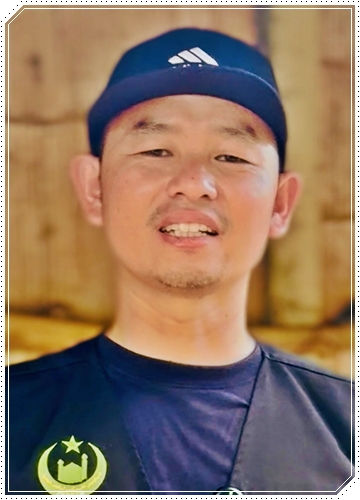
Programme coordinator, Ustaz Muhammad Farhan Tee Abdullah said the mission was a continuation of efforts to bring Islamic outreach directly to communities, with welfare and humanitarian assistance serving as important bridges to introduce the beauty of Islam.
He said the long journey and challenging geographical conditions had not deterred the delegation from delivering aid to villagers, including those living in hilly areas with limited access to healthcare services.
Such initiatives, he said, were not merely about providing material assistance, but also about fostering closer relationships with local communities while sharing the values of compassion, brotherhood and care that form the foundation of Islamic teachings.
He added that the close cooperation between PERKIM National, Muslim Care Malaysia Society, PAPISMA and the madrasah demonstrated how dakwah and welfare initiatives could be carried out more effectively through collective efforts, particularly in reaching underserved rural communities that require sustained attention.
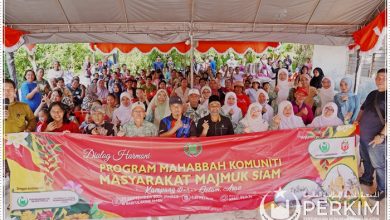
Upon arrival at the Mong Kao Lang village hall, the delegation was welcomed by more than 170 residents who had gathered to participate in the programme.
Residents received food aid packages, while children and adults were given the opportunity to undergo medical screenings according to their individual needs.
The services provided included blood pressure and cholesterol checks, as well as dental examinations, particularly for children. Toothbrushes were also distributed to encourage better oral hygiene, while residents identified as requiring treatment received appropriate medication from the PAPISMA medical team.
One of the most significant moments of the mission was the dakwah session led by Ustaz Jalaluddin Che Muda from Madrasah Civilize Pittaya, Chiang Rai, who joined the delegation to guide villagers in understanding Islam.
More than 150 residents were reported to have embraced Islam by reciting the syahadah, or Islamic declaration of faith, during the session, witnessed by the mission’s secretariat.
Those who embraced Islam also received food aid packages as part of the mission’s integrated approach combining religious outreach with humanitarian assistance.
The initiative continued as the delegation proceeded to a nearby village after performing the jamak and qasar prayers in congregation.
Another dakwah session was conducted at the second location, where approximately 150 more residents were reported to have recited the syahadah.
The development was an emotionally moving moment for members of the delegation, highlighting the importance of continuous religious guidance in helping communities understand Islam—not only during outreach programmes, but also beyond the conclusion of the mission.
A representative of Muslim Care Malaysia Society described participation in the mission as a deeply meaningful experience, particularly in witnessing first-hand how local residents received explanations about Islam and embraced the faith.
He expressed hope that similar programmes would continue in the future to strengthen ties with remote communities and extend the benefits of humanitarian assistance to those in need.
Bringing Healthcare to the Doorsteps of the Vulnerable
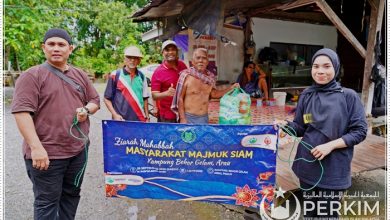
Beyond the activities at the village hall, the delegation also carried out welfare visits to several homes of elderly and unwell residents who were unable to attend the programme due to their health conditions.
Among the homes visited was that of Pa Mai, 52, located approximately 1.5 kilometres from the village hall.
The visit offered the delegation a firsthand glimpse into the realities faced by some rural communities, particularly the limitations in basic amenities and the challenges of accessing medical treatment.
The PAPISMA medical team also attended to several patients, including Yo Hea, 80, who suffers from diabetes; A Bia, 77, who had suffered a stroke affecting the right side of his body; his wife, who was reported to have kidney problems and an allergy to chicken; and Aya, 30, who has Down syndrome and a condition reported as involving nervousness.
Following on-site examinations and assessments, the medical team provided health advice and appropriate medication based on the patients’ respective conditions.
The delegation was assisted by interpreters from the madrasah and local guides in locating patients’ homes situated on hilly terrain and in areas with difficult access.
The living conditions of the households visited also offered a stark illustration of the hardships faced by some members of the community.
Several homes were constructed using timber and bamboo, with earthen floors and firewood used for cooking. In some households, basic amenities such as separate rooms, household equipment and electricity remained limited.
For the delegation, the visits were far more than routine welfare calls. They provided an opportunity to better understand the realities of rural life and extend assistance within the means available.
The initiative also underscored the principle that humanitarian care should never be confined by religious backgrounds, but should instead serve as a platform to promote compassion and humanity.
The PAPISMA team continued its visits to other patients, including an elderly individual suffering from osteoarthritis and diabetes, as well as a married couple facing health-related challenges.
Steep pathways and homes perched on elevated terrain made each visit particularly demanding, requiring additional effort from members of the delegation.
Sharing Sustenance and Strengthening Brotherhood
As night fell, the programme continued with the slaughter of a cow donated for distribution among the villagers.
The slaughter was carried out by Ustaz Jalaluddin Che Muda as part of the planned welfare activities under the mission.
Some of the beef was taken to the home of a madrasah student to be prepared for a meal, which the delegation later shared in the evening amid the forest-surrounded rural setting.
Despite the darkness and modest facilities, the gathering became a memorable experience for the mission members, further strengthening the spirit of brotherhood between volunteers and the local community.
The Chiang Rai Jaulah, Dakwah and Welfare Mission demonstrated that effective dakwah goes beyond the spoken word. It is also reflected through meaningful action, compassion and the willingness to be present for communities in need.
The collaboration between PERKIM National, Muslim Care Malaysia Society and PAPISMA is expected to continue, with the aim of expanding the reach of dakwah, improving access to healthcare and welfare assistance, and fostering stronger relationships with remote communities in the region.
Amid the long journey, steep terrain and modest living conditions, the mission carried a clear and enduring message: dakwah and humanitarian service are inseparable in delivering the mercy and compassion of Islam to all humanity.
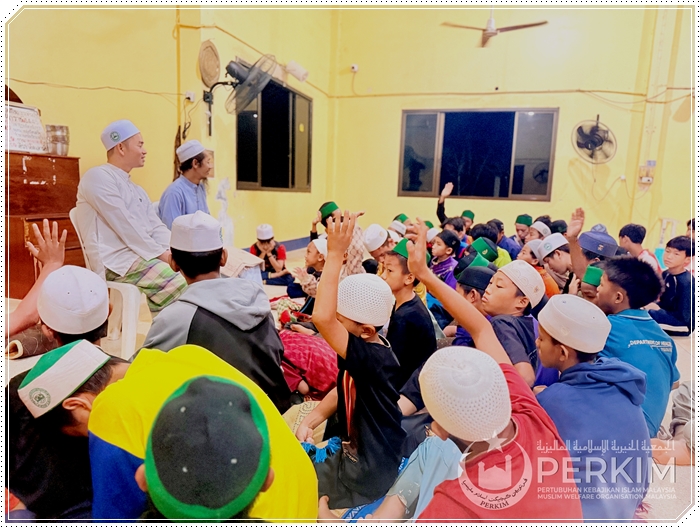
Ustaz Farhan Tee delivers a motivational talk to students of Madrasah As-Siddiqin after the Subuh prayers, with Ustaz Mukmin providing translation.
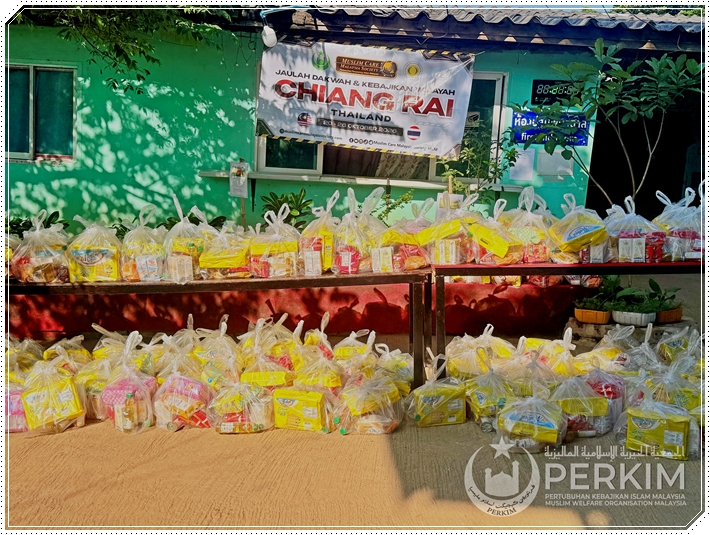
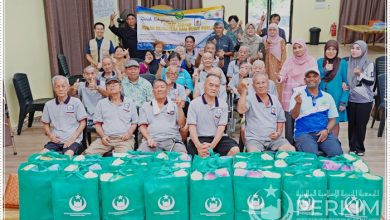
A total of 300 packed meals prepared for distribution to residents of Mong Kao Lang and Ban Cha Pa.
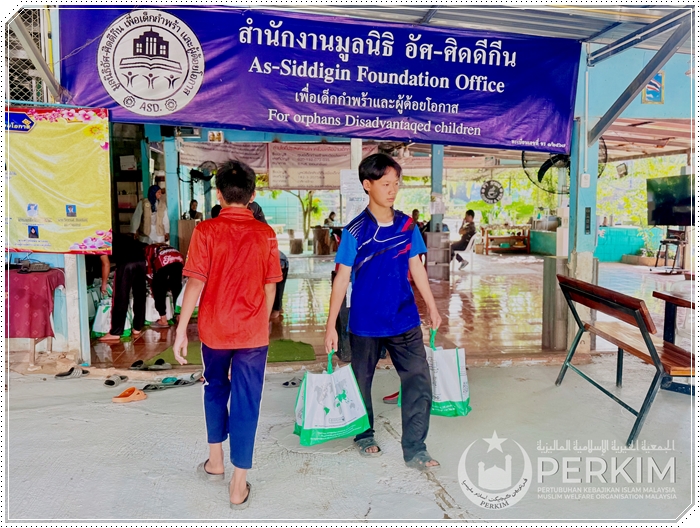
Students of Madrasah Yayasan As-Siddiqin carry bags containing essential food supplies to vehicles for transportation to the mountainous areas of Chiang Rai.
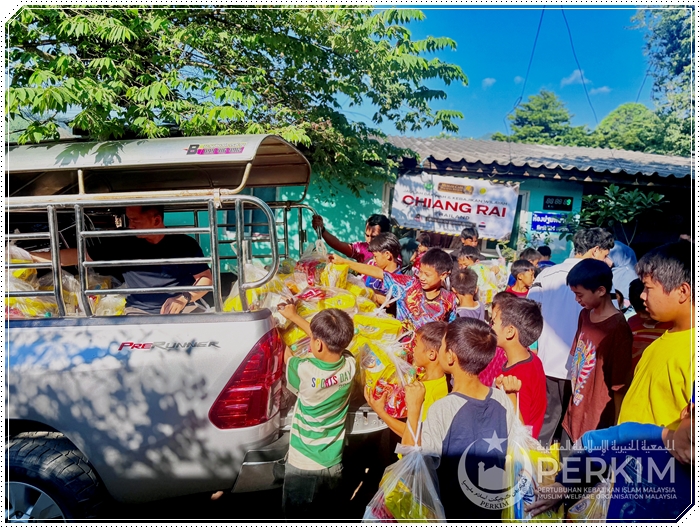
Madrasah students work together to load food aid packages onto four-wheel-drive vehicles before they are transported to Mong Kao Lang.
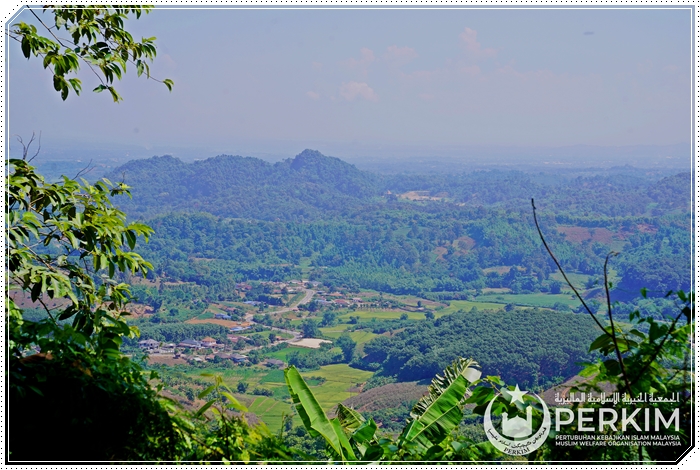
A breathtaking view of the Mong Kao Lang mountain range, located more than three hours’ journey from Madrasah Yayasan As-Siddiqin.
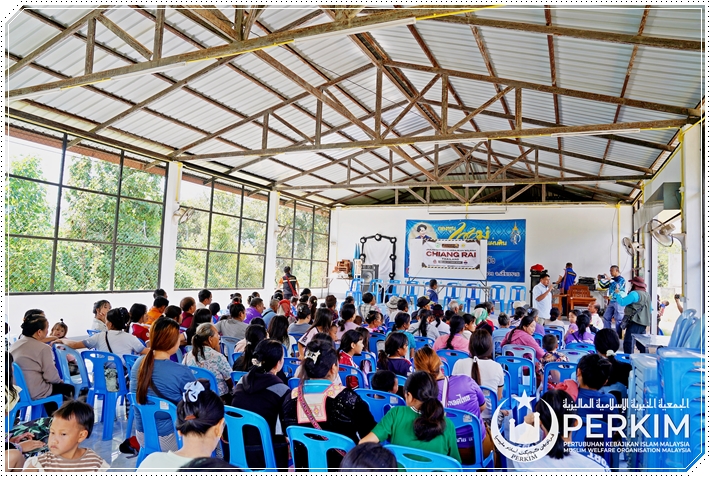
More than 170 members of the Akha tribal community gather to welcome the delegation from PERKIM, Muslim Care and PAPISMA.
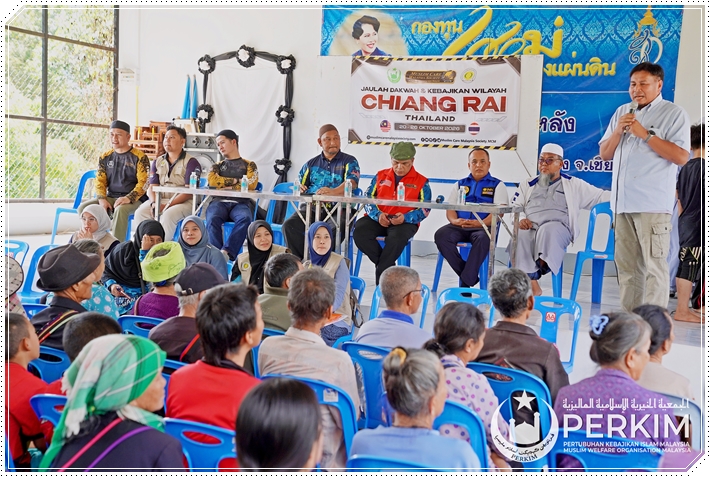
Ustaz Asaman Che Mat, principal of Madrasah Yayasan As-Siddiqin, introduces representatives from PERKIM, Muslim Care and PAPISMA to the villagers.
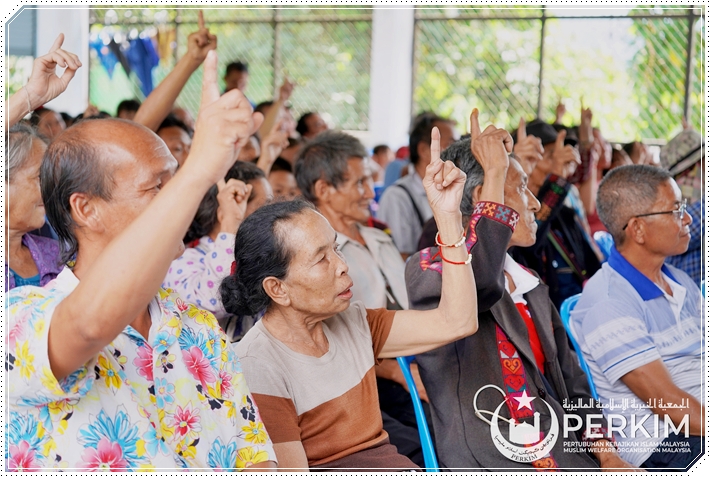
Residents of Mong Kao Lang raise their index fingers as they recite the two testimonies of faith, led by Ustaz Jalaluddin Che Muda.
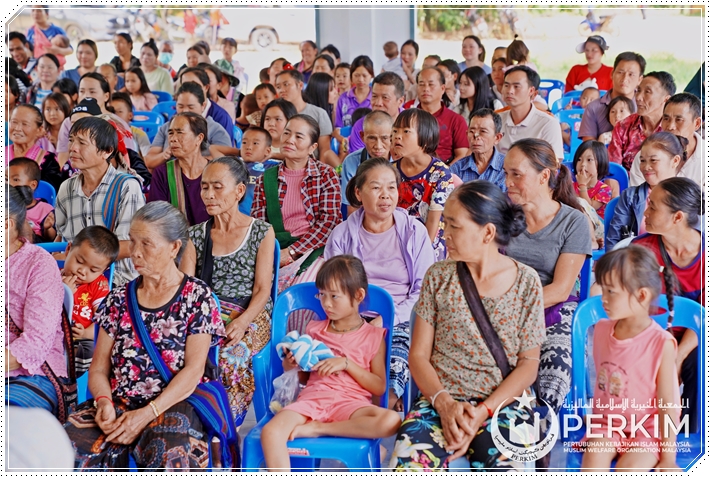
Residents of Mong Kao Lang gather at the village hall to listen to addresses delivered by members of the delegation.
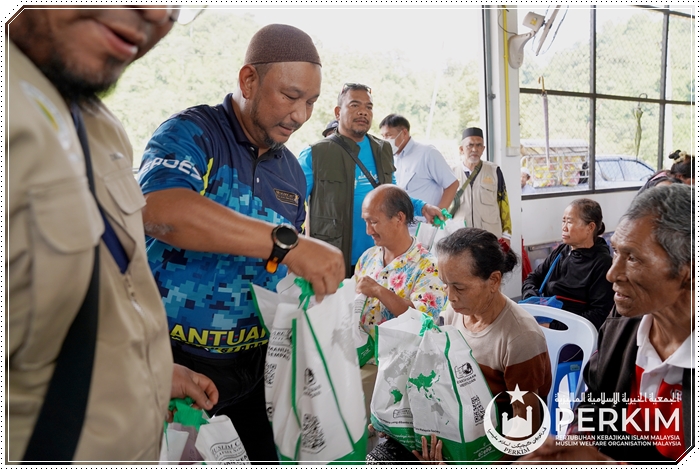
Muslim Care deputy president Haji Johari (wearing a kopiah) distributes food aid packages to villagers.
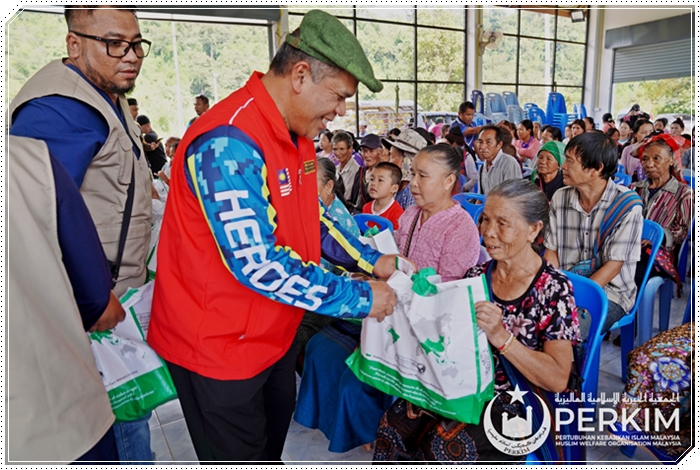
Muslim Care Malaysia Society president Haji Zulkifli distributes food aid packages to villagers.
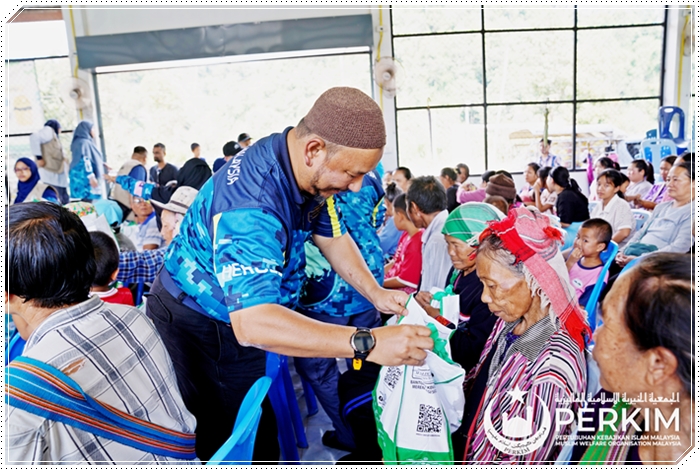
Residents of Mong Kao Lang receive food aid packages from Haji Johari.
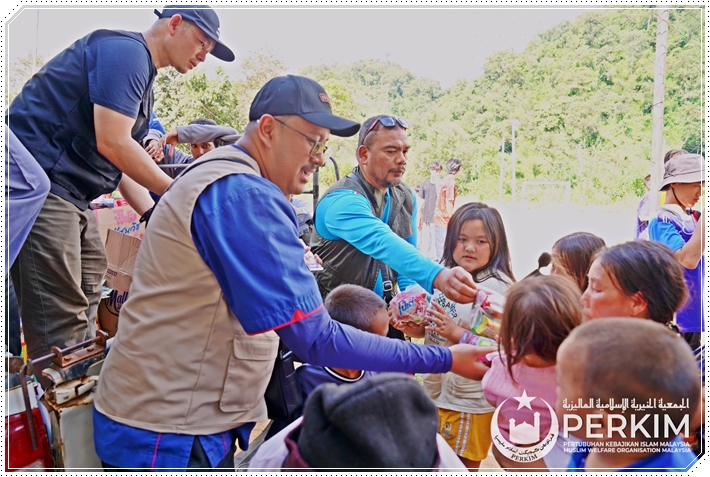
Ustaz Farhan Tee, alongside representatives from Muslim Care and PAPISMA, distributes toothbrush sets and snacks to village children.
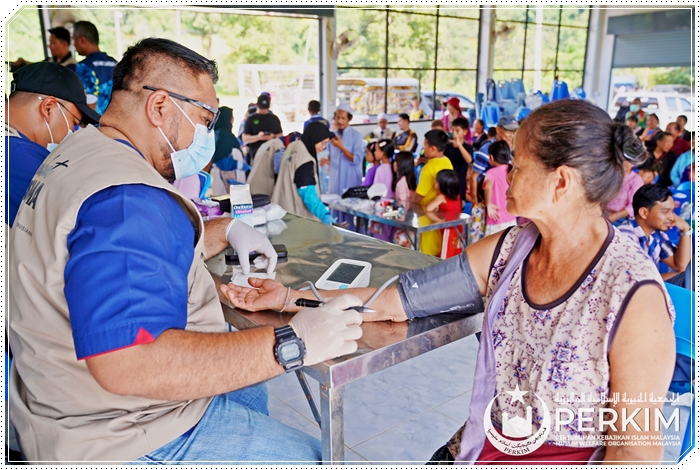
Villagers undergo blood pressure checks as PAPISMA sets up a free health screening station.
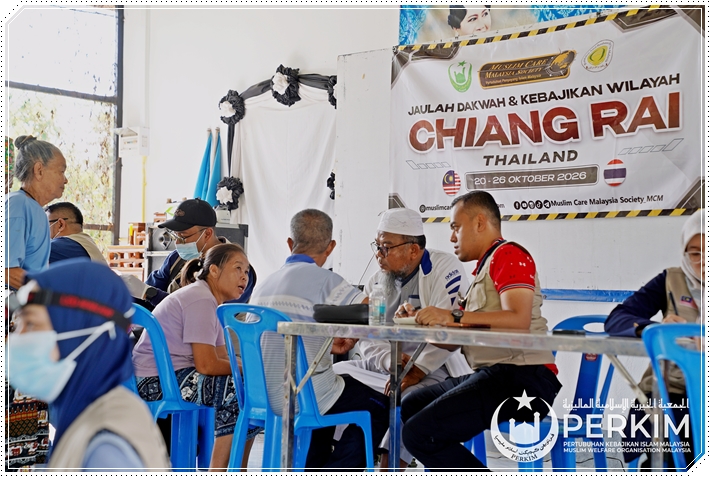
PAPISMA representatives also conduct blood glucose tests on villagers.
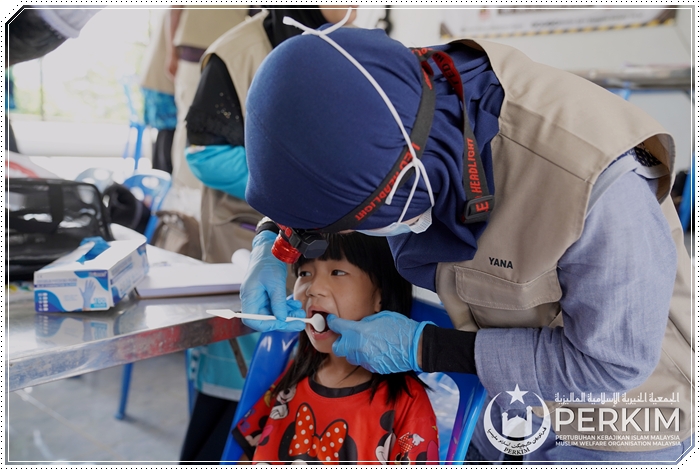
Village children undergo health and dental examinations.
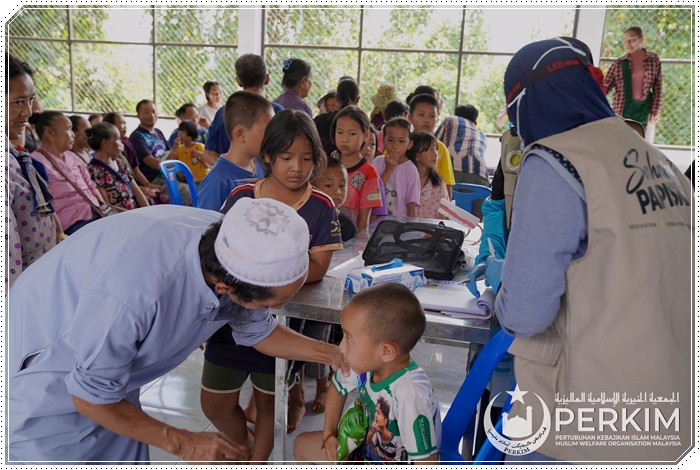
Children from Mong Kao Lang village queue for dental examinations.
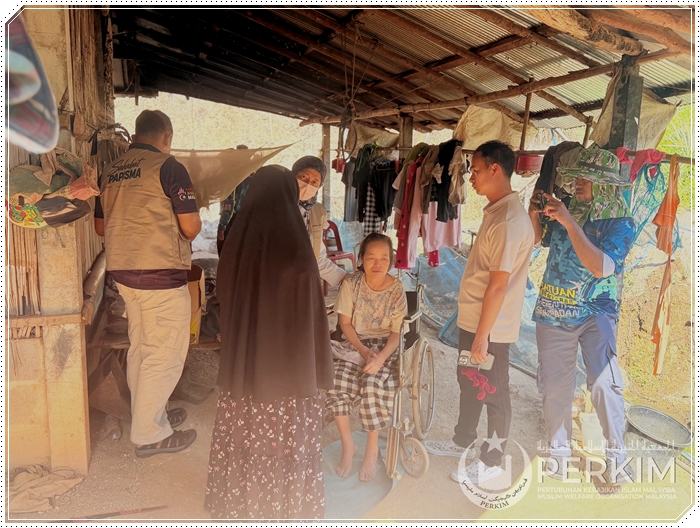
The PERKIM, Muslim Care and PAPISMA delegation examines the condition of Pa Mai, 52, a frail villager who is unable to walk.
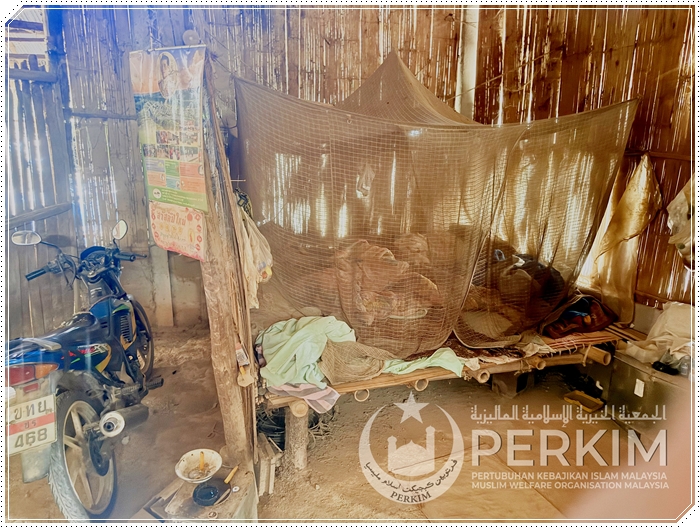
A glimpse of the homes inhabited by residents of Mong Kao Lang village.
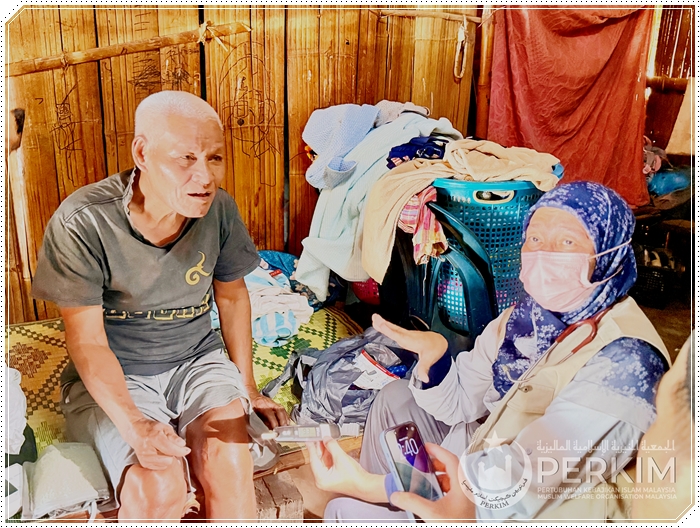
A PAPISMA doctor examines Yo Hea, 80, who suffers from diabetes.
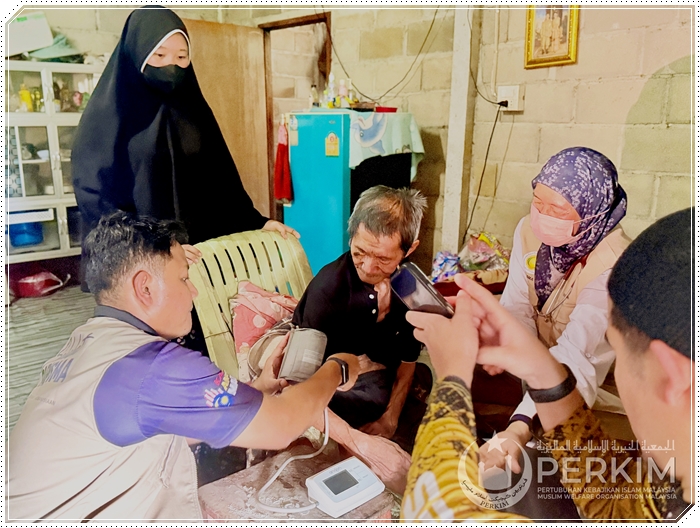
A PAPISMA doctor checks the blood pressure of A Bia, 77, who has suffered a stroke affecting the right side of his body, as well as his wife, who is reported to have kidney problems.
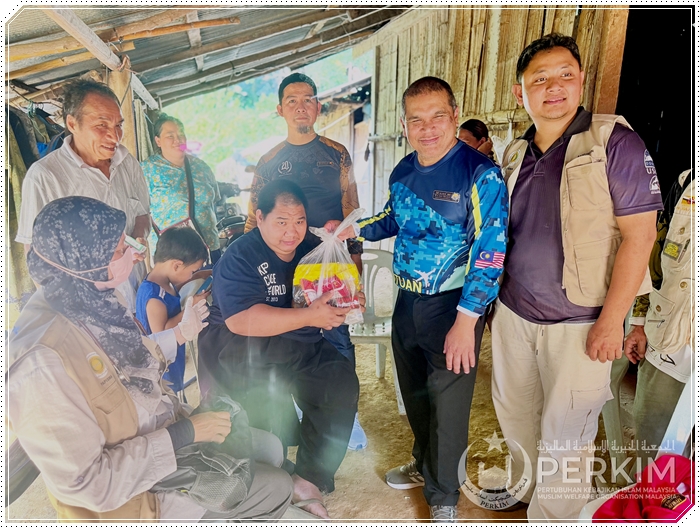
Aya, 30, who has Down syndrome and experiences anxiety-related difficulties, receives care and support from Muslim Care and PAPISMA.
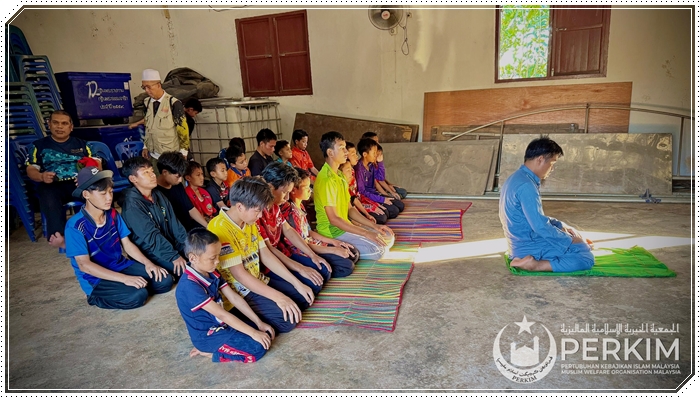
Ustaz Farid leads students of Madrasah Yayasan As-Siddiqin participating in the mission in performing the combined and shortened Zuhr and Asr prayers.
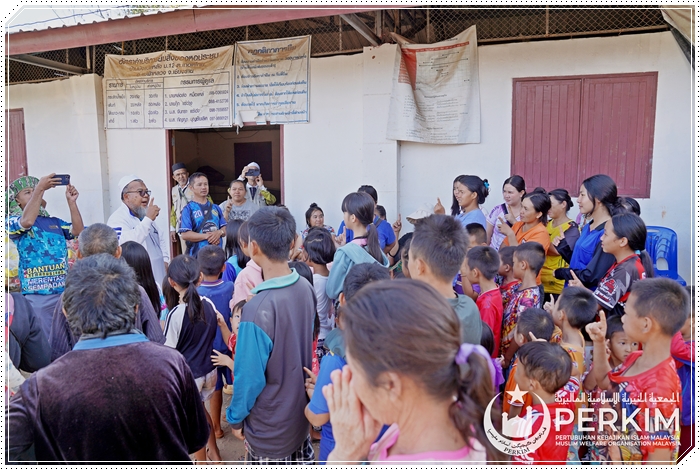
Ustaz Jalaluddin leads the recitation of the two testimonies of faith, followed by residents of Mong Kao Lang village.
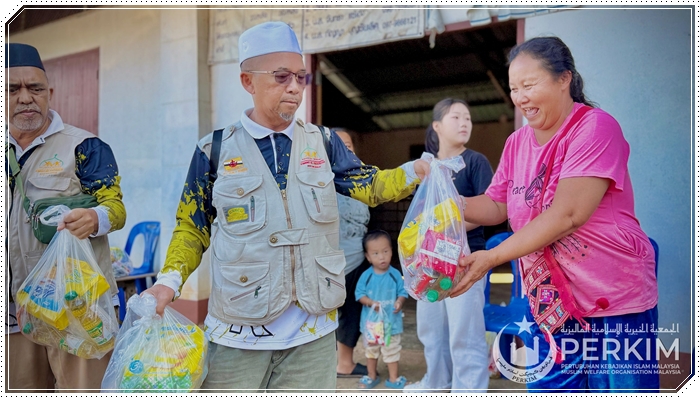
Haji Awang Idris Awang Mohamad of the Humanitarian Mission Community (KMK Brunei) distributes food aid packages to villagers.
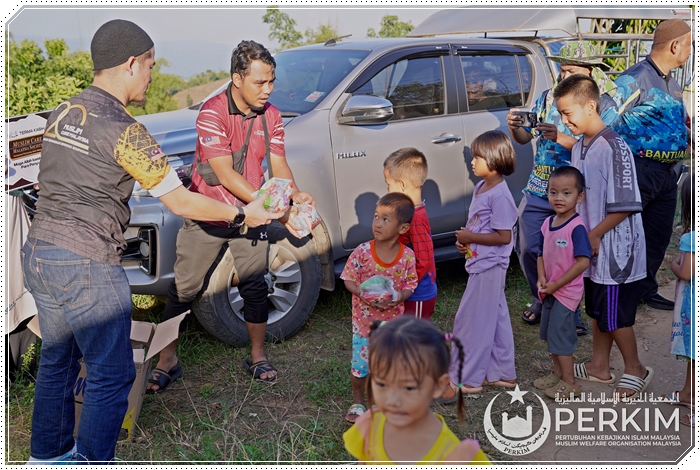
Aizat and Safuan distribute snacks to village children.
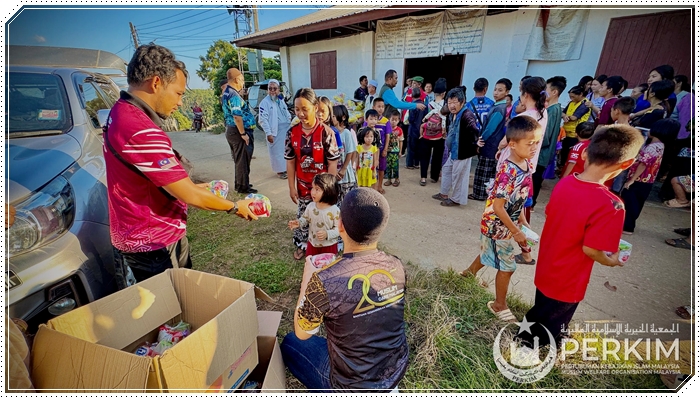
Villagers receive food aid packages, while children are presented with goodie bags.
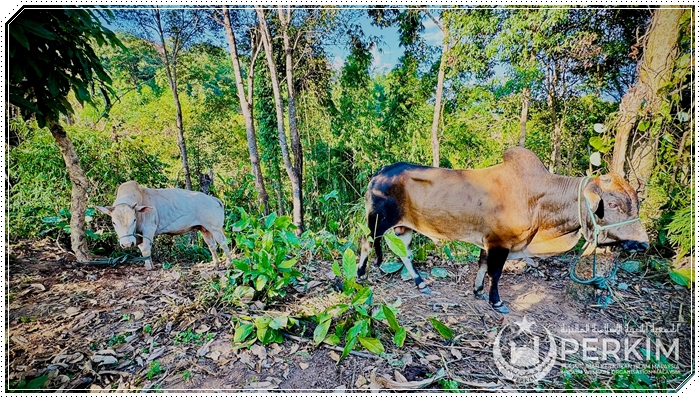
Two donated cattle are slaughtered, with the meat intended for distribution to residents of Mong Kao Lang village.
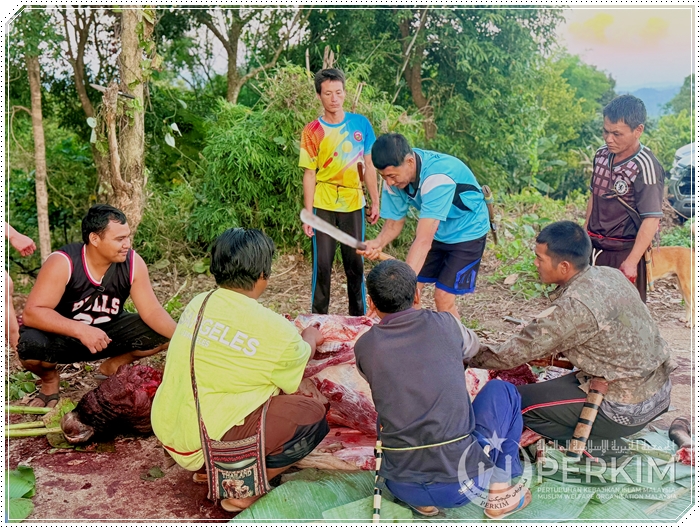
Villagers cut and butcher the cattle after they are slaughtered by Ustaz Jalaluddin Che Muda.
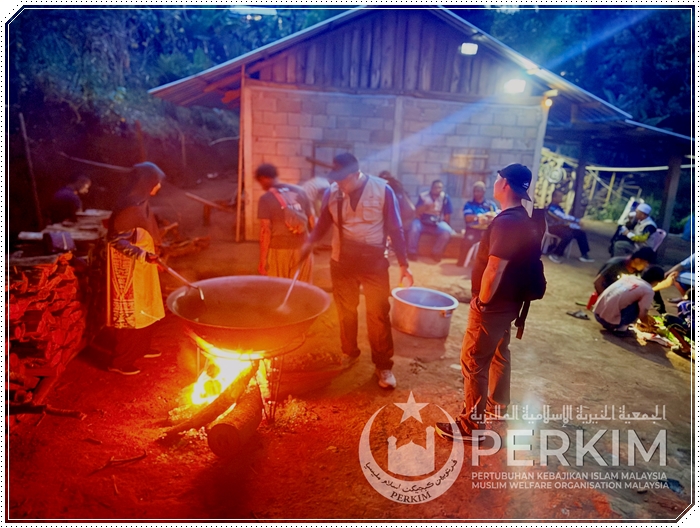
The beef is prepared as a traditional gulai dish for dinner, to be shared by the delegation and villagers.
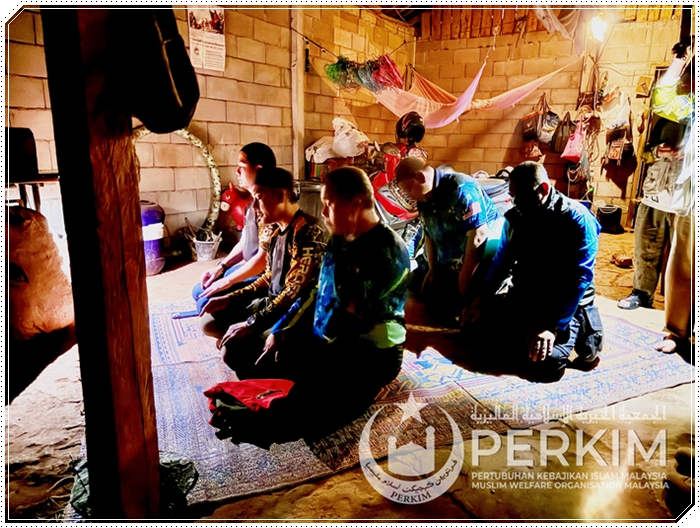
The delegation takes the opportunity to perform the Maghrib and Isyak prayers together, combining the two prayers in congregation.
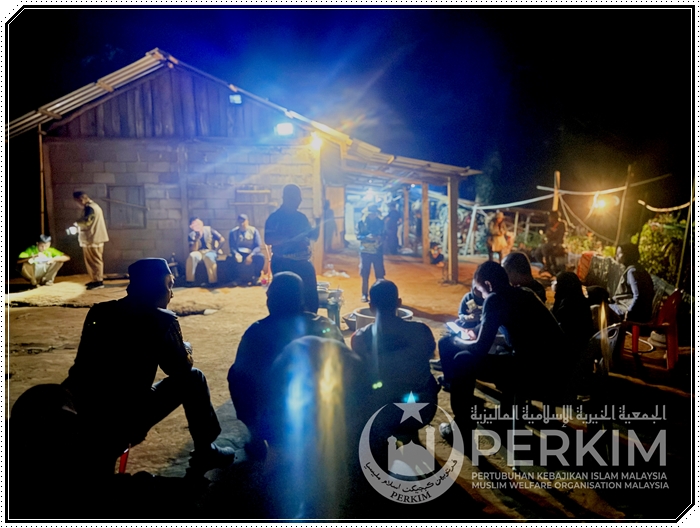
Representatives from PERKIM, Muslim Care and PAPISMA share dinner while listening to a religious reminder (tazkirah) delivered by Haji Johari.